


Choosing a renovation contractor locally is not just about who can reach your property fastest. It is about finding a team that understands your property type, local approval requirements, building rules, material availability, and the standard of finish you expect.
That is why a search for home renovation contractors near me should be treated as the beginning of your shortlist, not the final decision. The closest contractor may be convenient, but the best contractor is the one who can prove they have handled similar projects in your area and can deliver the result with clear scope, reliable workmanship, and professional project control.
The key is to compare contractors using the same criteria. If one company quotes from a WhatsApp photo, another conducts a detailed site visit, and a third includes design, MEP, finishes, and project supervision, their prices will not mean the same thing. This guide shows you how to compare local renovation contractors fairly before you hire.
Start with a renovation brief before contacting contractors
Contractors can only give meaningful advice and accurate pricing when they understand what you want to achieve. A vague request such as renovate my villa or update my apartment leaves too much room for assumptions. One contractor may price a cosmetic refresh, while another may include structural changes, waterproofing, electrical upgrades, cabinetry, and premium finishes.
Before you start comparing, create a simple renovation brief. It does not need to be a professional design package, but it should define the project clearly enough that each contractor is responding to the same request.
Include the essentials:
- Property type and location, such as villa, townhouse, apartment, office, or retail space
- Rooms or areas involved, such as kitchen, bathrooms, flooring, ceilings, landscaping, or full interior renovation
- Desired finish level, such as practical, mid-range, premium, or luxury
- Known issues, such as leaks, old wiring, damaged tiles, poor layout, or AC concerns
- Timeline expectations, including move-in dates or lease deadlines
- Budget range, if you have one, so contractors can recommend realistic options
- Any building, community, or landlord approval requirements you already know about
A clear brief also helps you spot which contractors are listening. A professional contractor will ask follow-up questions, challenge unclear assumptions, and explain what must be inspected before confirming the cost.
Build a local shortlist based on relevant experience
Local presence matters, but relevance matters more. A contractor who has completed luxury villa upgrades may not be the best fit for a compact apartment bathroom, and a team focused on quick office fit-outs may not be ideal for a detailed residential kitchen remodel.
When reviewing local contractors, look for evidence that they understand your type of project. Ask whether they have worked on similar homes, building types, and communities. In the UAE, this can make a real difference because villas, apartments, commercial spaces, and managed communities often come with different access rules, working hours, service lift requirements, noise limits, waste disposal procedures, and approval processes.
Do not rely only on polished before-and-after images. Ask for project examples that match your scope. If you are renovating a villa, you want to see experience with civil works, bathrooms, kitchens, ceilings, flooring, painting, carpentry, MEP coordination, and possibly landscaping. If you are renovating an apartment, you want a contractor who understands building management coordination, waterproofing risk, elevator protection, and tight worksite logistics.
Verify licenses, approvals, and insurance awareness
A renovation contractor should be able to explain how they operate legally and safely in your local area. The exact requirements can vary depending on the emirate, property type, building management, freehold community, landlord rules, and scope of work. The point is not that you need to become an approvals expert. The point is that your contractor should know when approvals, permits, NOCs, or building management coordination may be required.
Ask direct questions about licensing, supervision, and compliance. A reliable contractor should be comfortable discussing who will manage the site, which trades will be involved, how electrical and plumbing works are handled, and how they protect the property during renovation.
Insurance is also worth discussing, especially for larger projects. Renovation work can involve demolition, dust, water lines, electrical systems, heavy materials, and shared building areas. Contractors who take site protection seriously usually have clearer procedures for risk, safety, and damage prevention.
Treat the site visit as part of the interview
A site visit is one of the best ways to compare local renovation contractors. It reveals how carefully the contractor inspects the property, how they communicate, and whether they understand the hidden details that can affect cost and timeline.
A rushed site visit often leads to a weak quotation. For example, a bathroom renovation may look simple until the contractor checks waterproofing, drainage points, tile levels, wall condition, plumbing routes, ventilation, and access. A kitchen upgrade may require checking electrical load, water supply, cabinet measurements, appliance positions, ceiling details, and flooring transitions.
During the site visit, pay attention to what the contractor notices. Strong contractors usually ask about your lifestyle, maintenance expectations, storage needs, preferred finishes, and how the space will be used. They also identify constraints early rather than surprising you after work begins.
A professional site visit should cover practical points such as access, measurements, existing services, demolition needs, material handling, protection of nearby rooms, dust control, and whether specialist trades are needed. If a contractor gives a fixed price without inspecting properly, the quote may later change through variations.
Compare quotations line by line, not just by total price
The lowest quote is not always the cheapest once exclusions, weak materials, unclear supervision, and future repairs are considered. A proper comparison starts by checking whether each contractor has priced the same scope.
For Dubai and UAE projects, make sure the quotation separates major work categories. Civil works, plumbing, electrical, carpentry, painting, tiling, waterproofing, false ceilings, fixtures, fittings, and project management should be clear enough to understand. If a quote simply says complete renovation as per discussion, you have very little protection if expectations differ later.
For a deeper look at this stage, Renovate UAE has a dedicated guide on how to compare contractors renovation quotes in Dubai, including how to review inclusions, exclusions, materials, and payment milestones.
Cost research can also help you understand how trade pricing comparisons work. For example, homeowners in other markets use resources such as see how much tradespeople charge to benchmark trade rates before booking work, and the same principle applies locally: you should compare pricing against scope, skill level, finish quality, and site complexity rather than judging on the headline number alone.
| Quote area | What to check | Why it matters |
|---|---|---|
| Scope of work | Each room, task, and trade is listed clearly | Prevents confusion about what is included |
| Materials | Brands, finish types, quantities, and allowances are stated where possible | Helps you compare quality, not just price |
| Exclusions | Items not included are written clearly | Reduces surprise costs after signing |
| Timeline | Start date, duration, and key stages are explained | Helps you plan move-outs, deliveries, and approvals |
| Payment terms | Milestones are linked to progress | Protects cash flow and accountability |
| Warranty or defect support | Post-completion support is explained | Shows confidence in workmanship |
Evaluate workmanship before you sign
Good renovation work is visible in the details. Straight tile lines, even paint finishes, neat silicone joints, aligned cabinet gaps, clean ceiling edges, smooth plastering, and properly installed fixtures all tell you something about the contractor’s standards.
Ask to see completed work that is similar to your project. Photos are helpful, but they should show details, not only wide-angle glamour shots. If possible, request references or a visit to a completed site, especially for larger villa or full-home renovations. A contractor who is proud of their workmanship will usually have no issue showing real examples.
Also ask how quality is checked during the project. The answer should involve supervision, staged inspections, coordination between trades, and a handover process. Renovation quality depends on sequencing. For example, waterproofing should be tested before tiling, electrical points should be coordinated before cabinetry, and paint should not be rushed before surfaces are properly prepared.
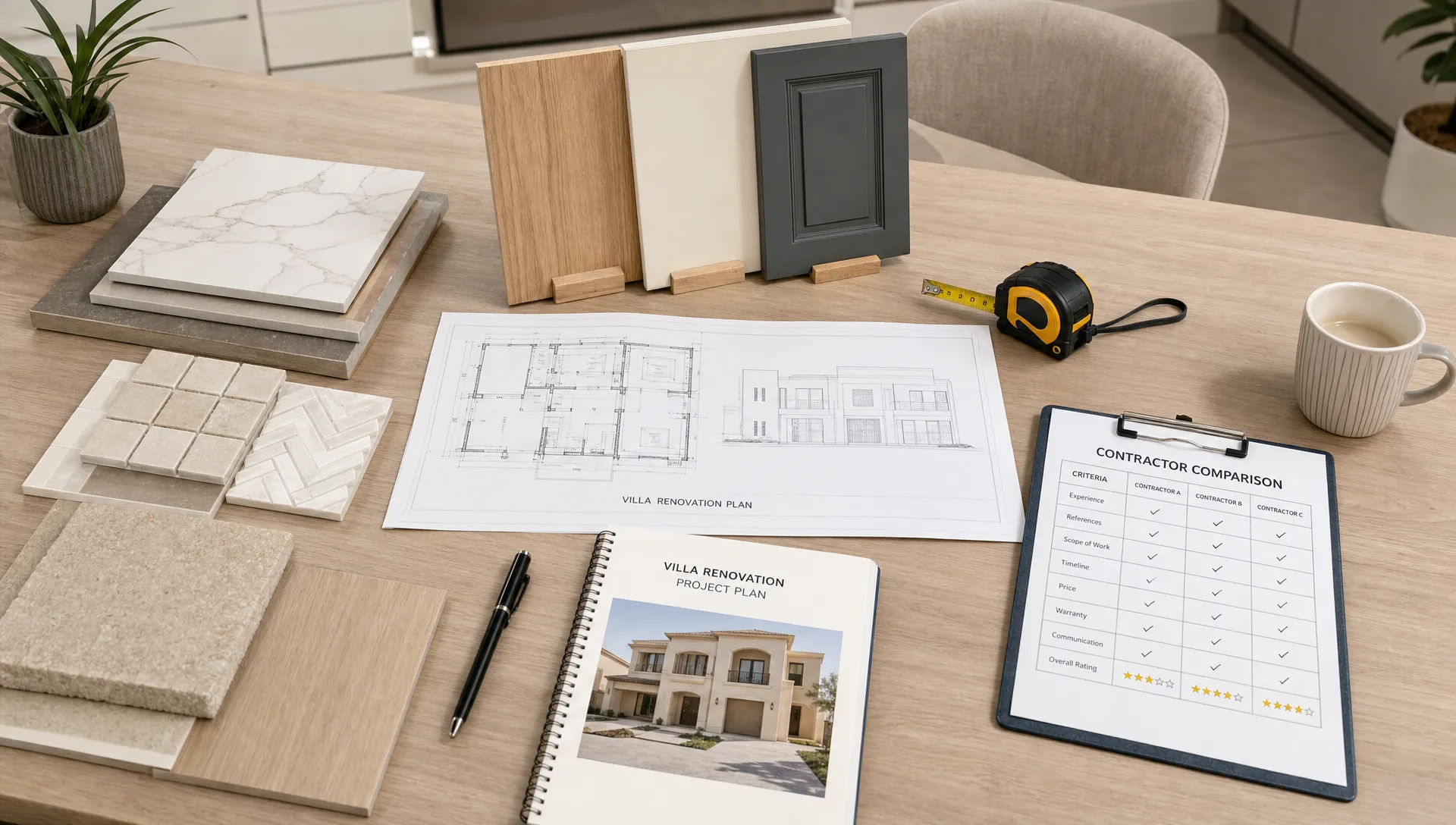
Assess communication and project control
A local contractor may have strong tradespeople, but poor communication can still make the renovation stressful. You need to know who your main contact will be, how decisions will be documented, and how changes will be priced.
Communication becomes even more important when you are living in the property during renovation, coordinating with building management, or managing the project while travelling. Delayed updates, unclear approvals, and verbal-only changes can create disputes later.
Ask how the contractor manages day-to-day work. Will there be a site supervisor? How often will you receive updates? How will material selections be confirmed? What happens if hidden issues appear during demolition? How are change requests approved?
| Contractor comparison factor | Strong sign | Warning sign |
|---|---|---|
| Responsiveness | Replies are clear, specific, and timely | Answers are vague or constantly delayed |
| Site supervision | A named person manages work and coordination | No clear person is accountable |
| Change management | Variations are priced and approved before work continues | Changes are handled verbally |
| Scheduling | Timeline includes stages and dependencies | Timeline is just a rough promise |
| Documentation | Scope, payment terms, and materials are written down | Important details remain informal |
Compare local fit for your property type
Local fit is more than being nearby. It means the contractor understands the practical environment of your project. A villa renovation may require material storage, exterior access, landscaping coordination, parking arrangements, and community rules. An apartment renovation may require strict lift protection, work permits, noise management, and careful coordination with security or building management.
This is where local experience can save time. Contractors who regularly work in your type of property are more likely to anticipate approval delays, access restrictions, delivery timing, and protection requirements. They may also know which finishes perform better in the UAE climate, especially for outdoor areas, kitchens, bathrooms, and high-humidity zones.
If your renovation includes bathrooms or kitchens, pay special attention to MEP coordination. Plumbing, drainage, waterproofing, electrical load, lighting, ventilation, and appliance placement all affect long-term performance. A contractor who treats these as background details may deliver a good-looking space that develops problems later.
Watch for red flags before hiring
Most renovation problems begin before the contract is signed. Homeowners often feel rushed because they want work to start quickly, but a little caution at the comparison stage can prevent expensive mistakes.
Be careful if you notice any of these warning signs:
- The contractor refuses to provide a written quotation
- The price is much lower than others without a clear reason
- The quote has broad lump sums and very few details
- The contractor avoids questions about licensing, supervision, or approvals
- They ask for a large upfront payment without clear milestones
- They promise an unrealistic timeline before inspecting the property properly
- They pressure you to decide immediately
- They cannot show relevant completed projects or references
One red flag does not always mean a contractor is unsuitable, but it should lead to more questions. If the answers remain unclear, keep looking.
Choose best value, not just lowest cost
The right local contractor is usually the one who offers the strongest balance of scope clarity, workmanship, communication, realistic pricing, and property-specific experience. This does not always mean choosing the most expensive quote. It means choosing the contractor whose proposal makes sense when compared against the result you want.
Before making the final decision, review your shortlist side by side. Rank each contractor for relevant experience, quote detail, site visit quality, communication, materials, timeline, and aftercare. If two contractors are close on price, the one with clearer documentation and better project control is often the safer choice.
It is also worth preparing a final question list before signing. Renovate UAE’s guide on what to ask contractors for home renovations before hiring can help you cover experience, approvals, timelines, payment structure, site management, and quality control.
Frequently Asked Questions
How many local renovation contractors should I compare? Comparing three contractors is usually enough for a clear view of pricing, approach, and professionalism. For larger villa or luxury renovations, you may want to speak with four or five before narrowing the shortlist.
Is the nearest contractor always the best choice? Not necessarily. A nearby contractor can be convenient, but relevant experience, proper licensing, strong workmanship, and clear project management matter more than distance alone.
What should a home renovation contractor quote include? A strong quote should include scope of work, materials or allowances, exclusions, timeline, payment milestones, warranty or defect support, and any assumptions about approvals or site conditions.
Should I avoid contractors who give estimates without a site visit? For anything beyond a minor cosmetic job, a site visit is highly recommended. Without inspecting the property, contractors may miss hidden issues that affect cost, timeline, and technical requirements.
How do I compare contractors if their quotes are very different? Ask each contractor to clarify inclusions, exclusions, material quality, supervision, and timeline. Large price gaps often come from different assumptions, not simply different profit margins.
Plan your renovation with a local UAE team
Comparing contractors carefully helps you avoid unclear pricing, weak workmanship, and stressful project delays. If you are planning a villa, home, apartment, office, or commercial renovation in the UAE, Renovate UAE can help with customized renovation solutions, interior design, kitchen and bathroom upgrades, civil work, electrical and plumbing, carpentry, painting, and landscaping.
Book a free site visit and estimate with Renovate UAE to discuss your project and understand what it will take to renovate your space with quality materials, modern finishes, and a clear plan.