


Comparing renovation quotes in Dubai is not just about finding the lowest number at the bottom of the page. A cheaper quote can become the most expensive option if it excludes approvals, uses vague material allowances, underestimates electrical or plumbing work, or leaves you exposed to variation costs once demolition begins.
The best way to compare contractors renovation quotes in Dubai is to make every contractor price the same scope, then review each quote for clarity, quality, risk, and accountability. Whether you are upgrading a villa, remodeling an apartment, or renovating a commercial space, a quote should tell you exactly what is included, what is excluded, how the work will be managed, and how changes will be handled.
Below is a practical framework you can use before signing a renovation contract.
Why renovation quotes vary so much in Dubai
Two contractors can visit the same property and return with very different prices. That does not always mean one is overcharging and the other is offering a bargain. It often means they are pricing different assumptions.
In Dubai, renovation costs can shift based on property type, access rules, building management requirements, community approvals, finish level, waterproofing standards, MEP complexity, disposal logistics, and whether the contractor has allowed enough time for proper supervision. A villa renovation in Emirates Hills, for example, has different site logistics from an apartment renovation in Downtown Dubai or a retail fit-out in a mall.
Quotes also vary because some contractors price only visible finishing work, while others include the less glamorous but critical work behind the walls: plumbing rerouting, electrical load checks, floor leveling, waterproofing, AC duct adjustments, ceiling supports, and protection of existing surfaces.
If you are still shortlisting companies, it helps to understand the broader criteria for comparing home renovation services in Dubai before you focus on the numbers.
Start with one clear renovation brief
You cannot compare quotes accurately if every contractor is working from a different brief. Before requesting prices, prepare a simple project scope that describes what you want done room by room.
Your brief should include the property type, approximate area, rooms involved, current pain points, must-have changes, preferred finishes, target timeline, and any known building restrictions. If you already have drawings, mood boards, tile references, sanitaryware selections, or appliance specifications, share them with every contractor.
A clear brief reduces guesswork. It also makes it easier to identify which contractor is listening carefully and which one is simply sending a generic estimate.
For larger renovations, ask contractors to visit the site before quoting. A quote prepared without a site visit may miss access issues, hidden defects, ceiling heights, drainage locations, electrical panel limitations, or building management constraints. Renovate UAE, for example, offers a free site visit and estimate, which helps align the quote with actual site conditions rather than assumptions.
What a professional renovation quote should include
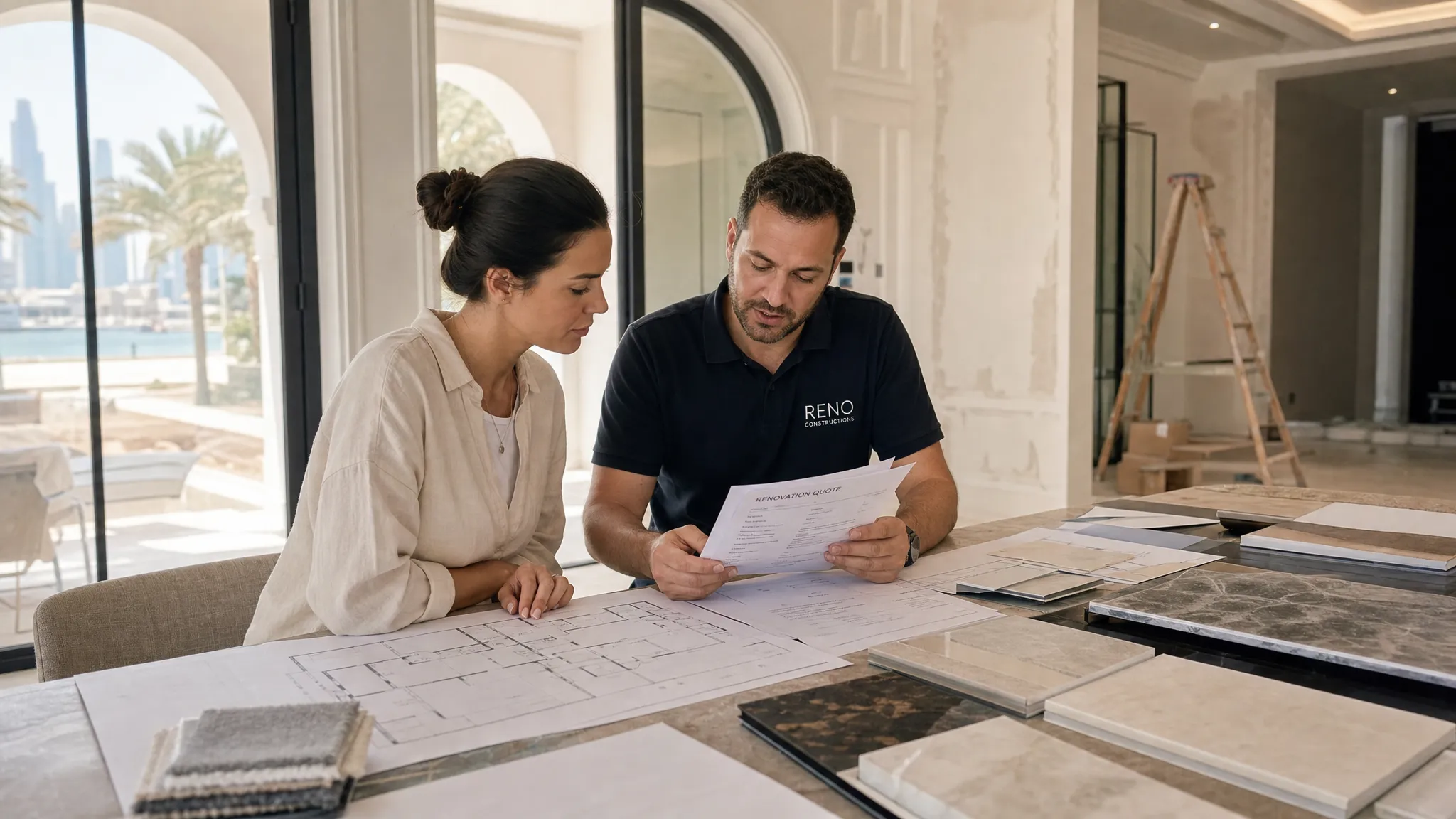
A strong quote is itemized, specific, and easy to question. It should not be a one-line total such as “complete renovation package.” That kind of quote may look convenient, but it makes it difficult to know what you are actually buying.
Use the table below to review each contractor’s proposal.
| Quote section | What to check | Why it matters |
|---|---|---|
| Scope of work | Rooms, areas, demolition, civil work, MEP, finishes, carpentry, painting, cleanup | Prevents disputes about what was included |
| Materials | Brand, model, grade, quantity, size, finish, allowance amount | Helps you compare quality, not just price |
| Labor | Installation, supervision, specialist trades, testing, finishing | Clarifies whether skilled work is properly allowed for |
| Approvals | Building management, community, authority, drawings, submissions, NOCs | Avoids delays and unexpected administrative costs |
| Timeline | Start date, duration, milestones, dependencies | Helps you assess realism and plan move-in dates |
| Exclusions | Items not included, client-supplied materials, authority fees, hidden defects | Reduces surprise variation claims |
| Payment terms | Deposit, progress payments, final handover payment | Protects cash flow and accountability |
| Warranty or defect liability | Workmanship coverage and process for rectification | Shows whether the contractor stands behind the work |
The goal is not to demand the longest document. The goal is to receive a quote that is detailed enough for a homeowner or project owner to make an informed decision.
Compare materials and specifications, not just totals
A renovation quote can look cheaper because it uses lower-grade materials, leaves material brands unspecified, or includes unrealistic allowances. This is especially common in kitchens, bathrooms, flooring, joinery, and decorative finishes.
For example, “supply and install tiles” is not enough detail. You should know the tile size, tile rate per square meter, whether adhesive and grout are included, whether tile leveling clips are included, and whether old tiles, screed repair, waterproofing, or skirting are part of the price.
The same applies to bathroom remodeling. A quote that includes proper waterproofing, slope correction, floor trap adjustment, pressure testing, and branded sanitaryware installation will naturally differ from one that simply mentions “bathroom upgrade.” If your project includes wet areas, you may also find it useful to review what matters when choosing bathroom remodeling contractors in Dubai.
For joinery, compare board type, laminate or veneer quality, hinges, drawer runners, edge banding, hardware brands, internal layouts, and installation method. For paint, compare surface preparation, primer, number of coats, paint brand, and whether crack repair is included. For electrical work, compare cable quality, DB modifications, switches, sockets, lighting points, testing, and compliance with relevant building requirements.
If a contractor uses allowances, ask whether they are realistic for your desired finish level. An allowance for tiles or sanitaryware that is too low may make the initial quote attractive, but you will pay the difference later.
Normalize each quote before comparing price
Once you receive multiple quotes, do not compare the totals immediately. First, normalize them. This means adjusting each quote so you are comparing the same scope, specification, and risk level.
Create a simple spreadsheet with categories such as demolition, civil work, plumbing, electrical, AC, ceiling, flooring, bathrooms, kitchen, carpentry, painting, approvals, cleaning, and waste disposal. Enter each contractor’s price against the same categories. If one quote excludes an item that another includes, add an estimated amount or ask the contractor to revise the quote.
This process often reveals why one quote is cheaper. It may exclude approvals, waste disposal, waterproofing, authority fees, design drawings, or final snagging. It may also include a large provisional sum that can change later.
A normalized comparison helps you separate a genuine cost advantage from an incomplete estimate.
Watch for red flags in low or vague renovation quotes
A low quote is not automatically a problem. Some contractors may have efficient teams, strong supplier relationships, or a better understanding of the scope. But you should be cautious when a quote is low because it is unclear.
Common red flags include:
- A single lump-sum price with no itemized scope
- Materials described only as “standard” or “good quality”
- No mention of approvals, building management coordination, or site access
- Very short timelines for complex renovation work
- Large upfront payment requests without clear milestones
- Missing exclusions, warranty terms, or variation process
- Refusal to revise the quote after you ask for details
A vague quote shifts risk to you. If something is not written down, it is difficult to prove that it was included.
Check approvals, permits, and building rules
Approvals are a major reason renovation quotes differ in Dubai. Depending on your property location and scope, you may need approval from building management, the master developer, the community, or a government authority. Work involving structural changes, façade changes, MEP modifications, drainage, electrical load, or commercial premises can be especially sensitive.
Relevant authorities and entities may include Dubai Municipality, Dubai Development Authority, DEWA, Civil Defense, free zone authorities, master developers, or building management teams. Requirements vary by area and project type, so always confirm the current process before work begins.
When comparing quotes, ask each contractor:
- Who prepares drawings or technical documents for approval?
- Who submits applications and follows up?
- Are approval fees included or excluded?
- Are building deposits, work permits, and access passes included?
- What happens if approval comments require design changes?
A contractor who understands approvals may not always be the cheapest, but they can save time, prevent stop-work notices, and reduce costly rework.
Review site protection and logistics
Dubai renovations often take place in occupied communities, apartment towers, gated villas, or commercial buildings with strict working hours. A professional quote should consider how the site will actually operate.
Look for details about floor protection, dust control, debris removal, elevator protection, neighbor disturbance, material storage, worker access, and cleaning. These items may not be glamorous, but they affect your daily life and your relationship with building management or neighbors.
For apartment renovations, ask whether the quote includes service elevator booking, common area protection, noise restrictions, and debris disposal. For villa renovations, ask about access for trucks, protection of landscaping, temporary water or power needs, and security coordination. For commercial renovations, ask about after-hours work, authority inspections, and handover requirements.
A quote that includes proper logistics may appear higher at first, but it usually reflects a more realistic understanding of the project.
Compare timelines carefully
A fast timeline can be appealing, especially if you want to move in quickly or reopen a commercial space. However, unrealistic timelines create pressure, shortcuts, and disappointment.
Ask contractors to break the timeline into phases such as approvals, procurement, demolition, MEP rough-in, civil works, waterproofing, tiling, joinery production, painting, installation, testing, snagging, and handover. This will show whether the schedule is practical.
Some materials require lead time, especially custom joinery, imported tiles, special sanitaryware, lighting, stone, glass, or bespoke finishes. If one contractor promises a much shorter timeline than the others, ask how they will achieve it and what assumptions they are making.
A good timeline should also include dependencies. For example, bathroom tiling cannot proceed before waterproofing is completed and tested. Kitchen installation may depend on final site measurements after wall and floor works. Painting quality depends on drying time, surface preparation, and dust control.
Understand payment terms and variation rules
Payment structure is a key part of quote comparison. A contractor’s price may be acceptable, but the payment terms may put too much risk on you.
A balanced payment schedule usually links payments to project milestones, such as contract signing, completion of demolition, completion of MEP rough-in, completion of major finishes, and final handover. Be cautious with very large upfront payments unless there is a clear reason, such as confirmed custom material procurement, and it is documented.
You should also ask how variations will be handled. Renovations can uncover hidden issues, especially once walls, ceilings, or floors are opened. A professional contractor should have a written process for variation orders, including description, cost, impact on timeline, and client approval before work proceeds.
Before signing, prepare the right questions. This guide on what to ask contractors for home renovations before hiring can help you cover experience, licensing, project management, and contract details.
Use a scoring system when quotes are close
When two or three quotes are similar, use a weighted scoring system instead of choosing based on a small price difference. This is especially useful for luxury villas, full-home renovations, and commercial projects where quality and management matter as much as cost.
| Evaluation factor | Suggested weight | What to consider |
|---|---|---|
| Scope clarity | 20% | Is the quote detailed, itemized, and easy to verify? |
| Relevant experience | 15% | Has the contractor completed similar villas, apartments, or commercial projects? |
| Material quality | 15% | Are brands, specifications, and allowances clearly stated? |
| Approval knowledge | 15% | Does the contractor understand Dubai approval and building management processes? |
| Timeline realism | 10% | Is the schedule detailed and achievable? |
| Communication | 10% | Are responses clear, timely, and professional? |
| Payment and contract terms | 10% | Are milestones, variations, and warranties clearly documented? |
| Price competitiveness | 5% | Is the final cost fair after normalizing inclusions and exclusions? |
You can adjust the weights based on your priorities. For a rental apartment refresh, price and speed may matter more. For a luxury villa renovation, workmanship, material quality, and project management usually deserve more weight.
Match the comparison method to your project type
Not every renovation quote needs the same level of detail, but every quote should match the complexity of the work.
For a villa renovation, focus on structural changes, façade work, landscaping, MEP upgrades, waterproofing, AC, flooring levels, custom joinery, and community approvals. Villas often involve more trades and more sequencing, so project management should be clearly included.
For an apartment renovation, focus on building rules, noise restrictions, service elevator access, wet area restrictions, waterproofing, drainage locations, and waste disposal. Apartment owners should be especially careful about approvals and common area protection.
For kitchen and bathroom renovations, focus on plumbing, electrical points, waterproofing, ventilation, cabinetry, countertops, tile installation, and appliance integration. These rooms can generate expensive variations if the original quote is vague.
For office or commercial renovation, focus on authority approvals, Civil Defense requirements where applicable, fit-out drawings, MEP compliance, lighting, data points, occupancy needs, and handover deadlines.
Final quote comparison checklist
Before you choose a contractor, make sure you can answer these questions confidently:
- Are all contractors pricing the same scope and finish level?
- Does each quote clearly separate inclusions, exclusions, and provisional sums?
- Are approvals, drawings, submissions, and authority fees addressed?
- Are materials specified by brand, model, size, finish, or allowance?
- Is the timeline realistic and broken into phases?
- Are payment milestones tied to progress?
- Is there a written process for variations and hidden defects?
- Does the contractor have relevant experience with your property type?
If the answer is no, ask for clarification before signing. A professional contractor should welcome clear documentation because it protects both sides.
Frequently Asked Questions
How many renovation quotes should I get in Dubai? For most projects, three detailed quotes are enough to compare pricing, scope, and professionalism. More than that can become confusing unless you have a very large or specialized renovation.
Should I choose the cheapest renovation contractor? Not automatically. Choose the quote that offers the best value after comparing scope, materials, approvals, timeline, payment terms, and workmanship risk. The cheapest quote may exclude important items.
What is the biggest mistake when comparing renovation quotes? The biggest mistake is comparing only the total price. You need to compare what is included, what is excluded, which materials are specified, and how variations will be handled.
Do Dubai renovation quotes include approvals? Some do and some do not. Always ask whether drawings, submissions, NOCs, authority fees, building permits, and management coordination are included or excluded.
Can a contractor change the price after work starts? Prices can change if the scope changes, hidden defects are discovered, or client-selected materials exceed the allowance. However, changes should be documented through approved variation orders before extra work begins.
Get a detailed renovation quote with confidence
A reliable renovation quote should give you clarity before work starts, not surprises after demolition begins. By comparing scope, materials, approvals, logistics, timelines, and payment terms, you can choose a contractor who offers genuine value rather than just a lower headline price.
If you are planning a villa, apartment, home, office, or commercial renovation in Dubai, Renovate UAE can help with a site visit, tailored estimate, interior design input, civil works, electrical and plumbing services, carpentry, painting, landscaping, and complete renovation solutions across the UAE.