


Comfort is usually the first thing homeowners want from a renovation, even when they describe it as “modernizing,” “refreshing,” or “making better use of space.” In the UAE, comfort often means more than soft furnishings. It means cooler rooms in summer, better lighting after sunset, easier movement around the home, quieter bedrooms, safer bathrooms, and kitchens that make daily routines feel smoother.
The good news is that affordable home renovations can deliver a noticeable improvement without turning into a full luxury rebuild. The key is to spend on changes you feel every day, not only on finishes that look good in photos. A beautiful room that stays too warm, lacks storage, or has poor lighting will still feel uncomfortable after the work is done.
Below are practical renovation ideas that increase comfort while keeping the scope controlled, especially for villas, apartments, and family homes across Dubai and the wider UAE.
Start With the Comfort Problems You Notice Daily
Before choosing tiles, paint colors, or fixtures, walk through your home and identify what makes everyday life harder. Many comfort issues are small on their own, but together they affect how the home feels.
Common examples include a living room that feels dark in the evening, a bedroom that gets too hot, a bathroom with poor ventilation, a kitchen with limited counter space, or a hallway with clutter because there is no proper storage. These issues are often more important than decorative updates because they influence daily routines.
A simple comfort audit helps you prioritize. Ask each person in the household which space feels least comfortable and why. If several people mention the same room, that area should move higher on the renovation list.
| Comfort issue | Affordable renovation approach | Why it helps |
|---|---|---|
| Rooms feel too warm | Improve shading, seal gaps, review AC airflow, use heat-aware finishes | Reduces heat discomfort and makes cooling feel more effective |
| Poor evening visibility | Add layered lighting and task lights | Makes rooms easier and safer to use at night |
| Cluttered spaces | Add built-in storage, better shelving, or concealed cabinets | Creates calmer rooms with easier movement |
| Noisy bedrooms | Improve curtains, door seals, rugs, and soft finishes | Helps reduce echo and outside noise |
| Tired bathrooms | Upgrade lighting, ventilation, vanity storage, and fixtures | Improves hygiene, safety, and daily convenience |
| Inefficient kitchen layout | Refresh cabinets, counters, lighting, and work zones | Makes cooking and cleaning faster and more comfortable |
This type of planning keeps the renovation focused. Instead of asking, “What can we change?” ask, “What change will make daily life easier?”
Improve Thermal Comfort Before Cosmetic Finishes
In the UAE, a home can look newly renovated and still feel uncomfortable if heat, glare, and airflow are not addressed. Thermal comfort should be one of the first priorities because it affects energy use, sleep quality, and how much time people actually enjoy spending in each room.
Start with simple improvements that support your existing cooling system. Seal visible gaps around doors and windows, check that AC vents are not blocked by furniture, and consider curtains or blinds that reduce harsh sunlight during peak hours. According to the U.S. Department of Energy, window coverings can help reduce heat gain when selected and used properly, which is especially relevant in hot climates.
You do not always need to replace every window or rebuild a room to make it feel cooler. In many homes, comfort improves when sunlight, airflow, and insulation weak points are handled together. Light-colored wall finishes, properly fitted blinds, and better door seals can make a room feel fresher while keeping renovation costs controlled.
For villas, shaded outdoor areas can also improve indoor comfort. When direct sun hits patios, large glass doors, or external walls all day, nearby rooms can feel warmer. Pergolas, exterior shades, landscape planting, and practical outdoor flooring can help soften heat around living areas while improving the way the home is used.
Use Lighting to Make Rooms Feel Calmer and More Functional
Lighting is one of the most cost-effective comfort upgrades because it changes how a space feels immediately. Many UAE homes rely heavily on ceiling lights, which can make rooms feel flat, harsh, or underlit in the wrong places. A more comfortable home usually needs layers.
Ambient lighting gives general brightness. Task lighting supports specific activities such as cooking, reading, shaving, applying makeup, or working from home. Accent lighting adds warmth and highlights features like shelves, wall textures, or artwork.
For an affordable renovation, focus on the rooms used most often. In a living room, add wall lights, warm LED strips, or floor lamps to reduce dependence on one central ceiling fixture. In kitchens, under-cabinet lighting can make food preparation easier and safer. In bathrooms, lighting near the mirror often matters more than decorative ceiling fixtures.
Color temperature also affects comfort. Warm white lighting is usually more relaxing for bedrooms and lounges, while neutral white works well for kitchens, bathrooms, and utility areas. The goal is not to make every room brighter. It is to make each room bright in the right way.
If your main comfort concern is the family lounge, small upgrades like fresh paint, improved lighting, and better furniture placement can transform daily use. Renovate UAE has also covered practical ideas for the renovation of living rooms if you want more inspiration for that specific space.
Upgrade the Kitchen for Easier Daily Routines
A kitchen does not need a complete rebuild to become more comfortable. Often, the biggest difference comes from improving workflow, lighting, storage, and surfaces.
Start by looking at the tasks that happen every day. Where do you prepare food? Where do you place groceries? Is the sink area comfortable? Are appliances easy to access? Do cabinet doors open properly, or do they clash with other areas? These questions reveal whether the kitchen needs a layout change or a more focused refresh.
Affordable kitchen renovations that improve comfort may include cabinet refacing, new handles, better drawer organizers, durable countertops, improved backsplash materials, and under-cabinet lighting. If the cabinet structure is still in good condition, replacing the visible surfaces can create a fresh look without the cost of a full replacement.
Comfort is also about cleaning. Smooth backsplashes, practical flooring, and moisture-resistant finishes make the kitchen easier to maintain. In family homes, this matters as much as visual style.
For homeowners who want a polished look without overspending, these affordable kitchen renovations offer more ideas on where to spend and where to save.
Make Bathrooms Safer, Fresher, and Easier to Use
Bathrooms have an outsized impact on daily comfort. A cramped, poorly lit, or humid bathroom can make mornings stressful and evenings less relaxing. The good news is that many bathroom improvements do not require moving every plumbing line.
Start with ventilation, lighting, and storage. Good ventilation helps reduce humidity and odors. Better mirror lighting improves grooming and makes the room feel cleaner. A vanity with proper drawers or shelves can remove countertop clutter and make the space easier to maintain.
Fixtures also matter. A new shower mixer, handheld shower, modern toilet, or upgraded basin can improve daily use without changing the entire bathroom layout. Anti-slip flooring, grab-friendly edges, and easy-access storage are especially valuable for families with children or older adults.
Bathrooms should feel practical first and premium second. When the layout works, the lighting is comfortable, and materials are easy to clean, even a modest bathroom renovation can feel like a major lifestyle upgrade. For more room-specific ideas, see these budget bathroom renovation ideas that focus on a premium feel without unnecessary rebuilding.
Add Storage That Reduces Visual Stress
Comfort is not only physical. A cluttered home can feel tiring, even when the finishes are new. Storage upgrades are among the most practical affordable home renovations because they make rooms easier to use every day.
Built-in storage is especially useful in UAE apartments and villas where families may need space for shoes, school bags, cleaning supplies, seasonal décor, sports equipment, and guest items. Instead of adding random cabinets, design storage around actual habits.
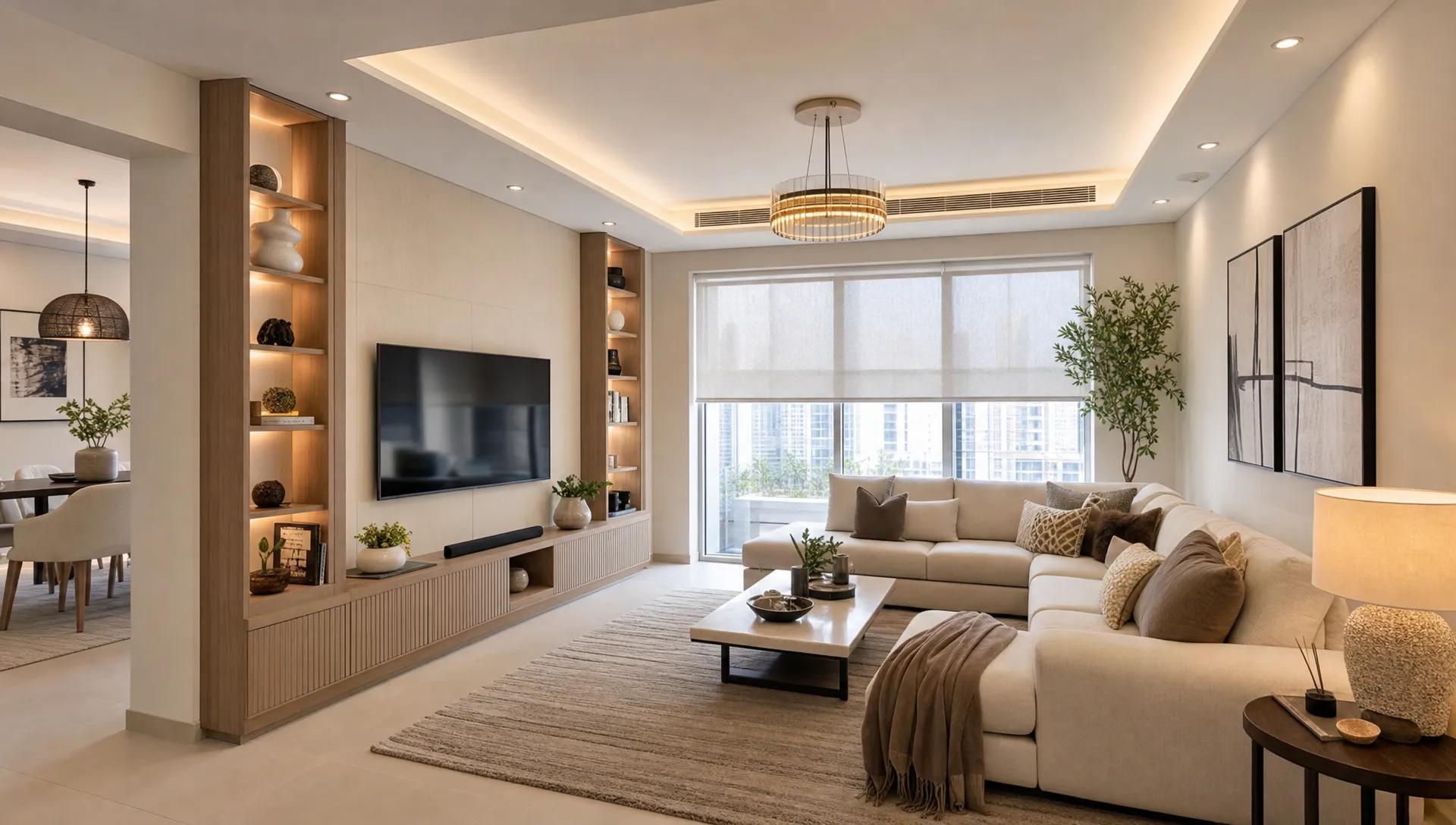
In entryways, closed shoe cabinets and wall hooks can reduce clutter near the door. In bedrooms, fitted wardrobes can use vertical space better than freestanding furniture. In living rooms, TV wall units with concealed storage can hide cables, remotes, and everyday items. In laundry or utility areas, shelves and cabinets can make cleaning supplies safer and easier to reach.
The most comfortable storage is the storage you actually use. That means it should be accessible, not too deep, and located where the item naturally belongs.
Refresh Flooring for Comfort Underfoot
Flooring changes the feel of a home more than many people expect. It affects sound, temperature, safety, cleaning, and the overall mood of each room. Replacing all flooring can be expensive, but targeted updates can still improve comfort.
In bedrooms, softer flooring options or large rugs can reduce noise and make the room feel warmer and calmer. In living rooms, durable tiles or high-quality vinyl can provide easy maintenance while still feeling modern. In bathrooms and kitchens, slip resistance and water resistance should matter more than trend-driven choices.
If your existing flooring is still structurally sound, you may not need to remove everything. Sometimes comfort improves through regrouting tiles, replacing damaged sections, adding rugs, or using transition strips to remove awkward edges between rooms.
When choosing flooring, think about how the space is used. A guest bedroom, family lounge, kitchen, and outdoor terrace all need different levels of durability and comfort. The right material is the one that fits the routine, not simply the one that looks best in a showroom.
Reduce Noise With Soft Finishes and Better Sealing
Noise is an often overlooked comfort problem. In apartments, it may come from neighboring units, corridors, elevators, or traffic. In villas, it may come from outdoor areas, mechanical systems, or echo inside large open rooms.
Affordable acoustic improvements can be simple. Heavy curtains, rugs, upholstered furniture, door seals, and fabric wall elements help reduce echo and soften sound. Bedrooms benefit from better window coverings and sealing around doors. Living rooms with hard floors and bare walls often feel more peaceful once soft materials are added.
You do not have to turn your home into a recording studio. The goal is to reduce harshness and create a calmer environment. This is especially helpful for families, remote workers, and anyone sensitive to noise while sleeping.
Improve Air Quality and Ventilation
Comfort also depends on how fresh a home feels. Poor ventilation can make rooms smell stale, increase humidity, and make bathrooms or kitchens less pleasant. Before investing heavily in decorative upgrades, check whether air is moving properly through the home.
In kitchens, a good extractor and practical layout help remove cooking odors. In bathrooms, ventilation is essential for freshness and moisture control. In laundry areas, airflow helps reduce damp smells. In bedrooms, clean AC filters and unobstructed vents can make the room feel more comfortable at night.
The World Health Organization has long emphasized the health importance of indoor air conditions, especially where pollutants can build up indoors. For renovation planning, that means ventilation should be treated as part of comfort, not as an afterthought.
A renovation contractor can also check whether plumbing, electrical, and ventilation changes should happen together. Coordinating these works helps avoid opening the same wall or ceiling more than once.
Choose Paint and Wall Finishes That Support the Mood of Each Room
Paint is one of the most affordable ways to change comfort, but it should be selected with purpose. In hot, bright climates, very dark colors can make rooms feel heavier, especially if there is limited natural light. Light neutrals, soft warm tones, and muted colors often create a calmer base.
For bedrooms, avoid overly harsh contrasts unless the room has enough soft furnishings to balance them. For living rooms, washable paints are practical for families and entertaining. For bathrooms and kitchens, moisture-resistant finishes are important.
Feature walls can still work, but they should not overpower the room. A textured wall behind a bed, a soft accent color in a dining area, or a refined finish in an entrance can add personality without increasing the renovation budget too much.
The comfort test is simple: does the finish make the room feel easier to live in, or only more dramatic?
Make Small Layout Changes Before Buying New Furniture
Many homeowners assume they need new furniture when the real issue is layout. A room can feel uncomfortable because walking paths are blocked, seating is too far from lighting, or storage is placed in the wrong area.
Before purchasing new pieces, test a revised layout. Move seating away from direct AC drafts, create clearer pathways, and position furniture so conversations feel natural. In dining areas, make sure chairs can move comfortably. In bedrooms, avoid blocking wardrobe doors or forcing people to walk around sharp corners at night.
If built-in carpentry is part of the renovation, plan it around the layout rather than adding it afterward. A custom TV unit, wardrobe, desk, or storage bench can make a room feel more spacious because it fits the available wall and supports daily routines.
Do Not Ignore Outdoor Comfort
For villas and townhouses, outdoor spaces can add major comfort when renovated affordably. You may not need a full landscaping project to make a garden, balcony, or terrace more usable.
Shade is the first priority. A shaded seating corner, pergola, outdoor curtains, or strategic planting can make outdoor areas more practical for more months of the year. Flooring also matters. Outdoor tiles, artificial grass, or easy-care surfaces can make the space cleaner and more inviting.
Lighting extends usability after sunset. Soft garden lights, wall lights, or pathway lighting can make outdoor areas safer and more relaxing. If the space is near the kitchen or living room, improving the transition between indoors and outdoors can make the whole home feel larger.
Outdoor comfort is not only about entertaining guests. It can create a peaceful morning coffee spot, a children’s play area, or a quiet evening retreat.
Where to Spend and Where to Save
Affordable renovation does not mean choosing the cheapest option everywhere. It means spending where quality affects comfort, safety, and durability, while saving on areas that are easier to update later.
Spend more on electrical safety, plumbing quality, waterproofing, ventilation, frequently used fixtures, and surfaces that face daily wear. Save on decorative items that can be changed later, such as loose furniture, accessories, and some feature finishes.
A balanced renovation budget usually separates essentials from enhancements. Essentials make the home function better. Enhancements make it look more complete. Both matter, but essentials should come first.
For example, in a bathroom, proper waterproofing and ventilation are more important than an expensive mirror. In a kitchen, durable counters and good lighting may improve comfort more than premium decorative handles. In a bedroom, blackout curtains and a better wardrobe layout may matter more than a feature wall.
Plan Renovation Work in the Right Order
The order of work affects cost and comfort. If you paint before fixing electrical points, you may need repainting later. If you install cabinets before checking plumbing or wall levels, adjustments can become more difficult.
A practical sequence usually starts with inspection and planning, then civil work, electrical and plumbing adjustments, ventilation, carpentry, surface preparation, flooring or tiling, painting, fixture installation, and final finishing. The exact order depends on the project, but the principle is always the same: hidden work should come before visible finishes.
This is where a site visit helps. A renovation professional can identify what is simple, what needs coordination, and what may create hidden costs if ignored. For homeowners trying to stay within budget, early clarity is one of the best ways to avoid expensive changes midway through the project.
Frequently Asked Questions
What are the most affordable home renovations for comfort? Lighting upgrades, improved storage, better curtains or blinds, bathroom ventilation, cabinet refacing, paint refreshes, and targeted flooring improvements are often affordable ways to make a home more comfortable.
Should I renovate the kitchen or bathroom first? Choose the space that affects your daily routine most. If cooking, storage, and cleaning are frustrating, start with the kitchen. If hygiene, ventilation, safety, or morning routines are the bigger issue, start with the bathroom.
Can affordable renovations still look premium? Yes. A premium feel often comes from good planning, neat finishing, balanced lighting, coordinated materials, and practical layouts rather than the most expensive products.
How do I avoid overspending on a comfort-focused renovation? Start with a clear list of daily problems, separate essential fixes from decorative upgrades, keep plumbing and major layout changes limited where possible, and get a site assessment before finalizing materials.
Are small renovations worth it before selling or renting a home? Small comfort upgrades can make a property feel cleaner, brighter, and easier to live in. Focus on visible wear, lighting, bathroom freshness, kitchen usability, and general maintenance before spending on highly personal luxury features.
Create a More Comfortable Home Without Overbuilding
The best affordable home renovations are not always the biggest ones. They are the changes that make your home cooler, calmer, safer, easier to clean, and more enjoyable every day. By focusing on lighting, ventilation, storage, layout, bathrooms, kitchens, and practical finishes, you can create a home that feels significantly better without unnecessary overbuilding.
Renovate UAE provides customized renovation solutions for villas, homes, apartments, and commercial spaces across the UAE, including kitchen and bathroom upgrades, interior design, civil work, electrical and plumbing, carpentry, painting, and landscaping. If you want to understand what improvements make the most sense for your property, request a free site visit and estimate through Renovate UAE.