


A full house renovation can transform the way a property looks, feels, and functions. It can also become stressful if the project starts before the scope, budget, approvals, materials, and contractor responsibilities are clear.
In the UAE, delays often come from practical issues rather than dramatic surprises. A drawing is approved late. A tile is out of stock. A villa community asks for an extra approval. A plumbing line needs replacement before the bathroom can be closed. A homeowner changes the kitchen layout after electrical work has already started.
The good news is that most costly delays can be prevented with proper planning. Whether you are renovating a villa, townhouse, apartment, or family home, the steps below will help you keep your project organized from the first site visit to final handover.
Start with a renovation brief, not a shopping list
Many homeowners begin with finishes: marble, lighting, paint colors, kitchen cabinets, bathroom tiles. Those details matter, but they should come after the renovation brief.
A renovation brief defines what you want the project to achieve. It keeps every contractor, designer, supplier, and trade working toward the same outcome. Without it, the project becomes a series of disconnected decisions, which is one of the fastest ways to lose time and money.
Your brief should clarify:
- Which areas are included in the renovation
- Which rooms need layout changes
- Whether electrical, plumbing, AC, or waterproofing upgrades are required
- Which finishes are essential and which are flexible
- Whether you need interior design support, landscaping, or exterior work
- Your preferred move-in or handover date
- Your budget range and contingency allowance
For a villa renovation, the brief may also include boundary walls, outdoor kitchens, parking areas, gardens, pergolas, pools, or service rooms. For an apartment renovation, it should include building management rules, lift access, noise restrictions, and working-hour limitations.
A clear brief prevents scope creep. It also helps contractors provide accurate quotations because they are pricing the same work, not guessing what might be added later.
Inspect the property before finalizing the budget
A full house renovation is not just a cosmetic exercise. Even if the main goal is to modernize the interiors, the condition of the existing property will influence the timeline and budget.
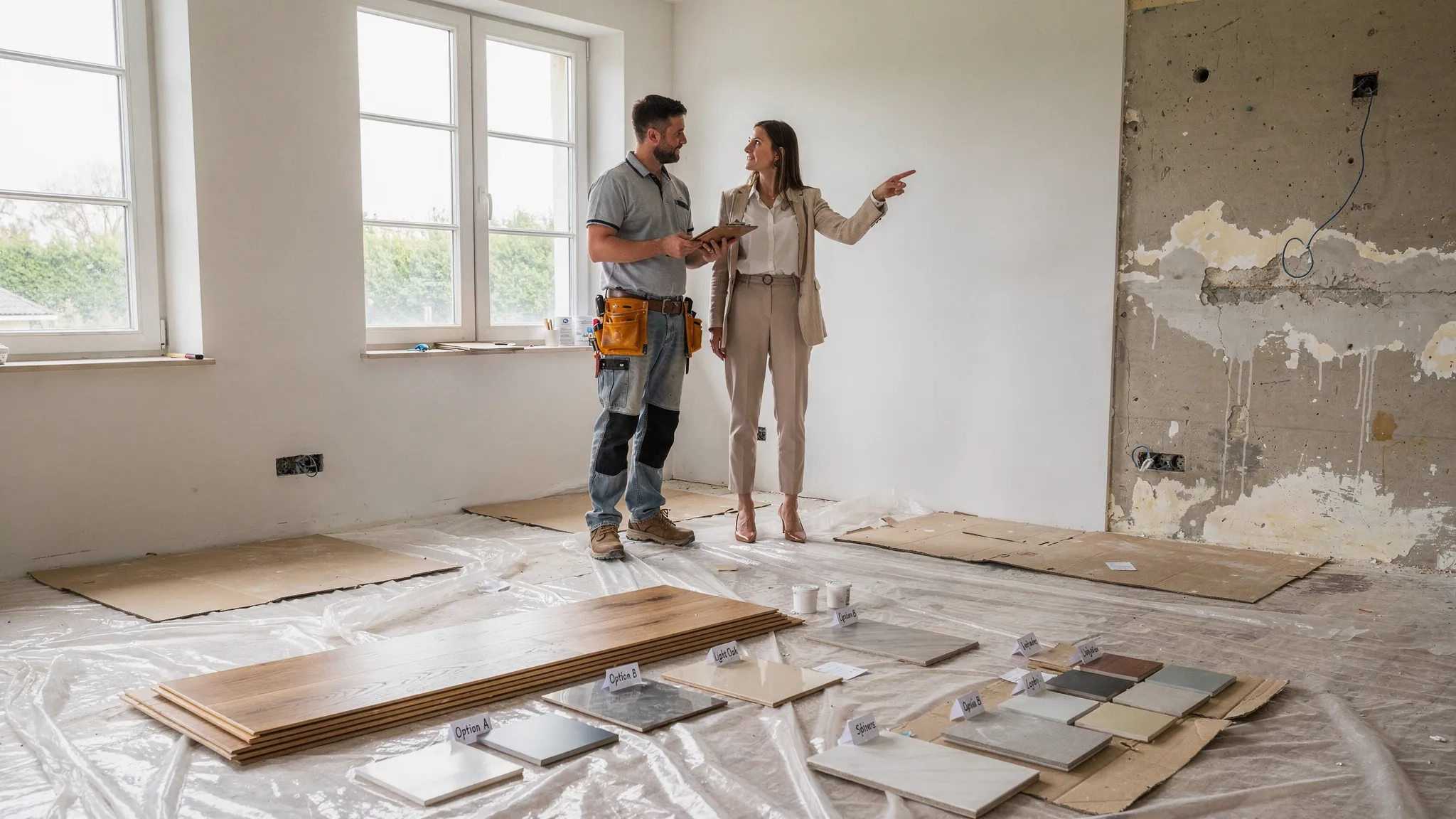
Before you commit to a design or quotation, arrange a proper site inspection. A contractor should assess visible and likely hidden conditions, including electrical capacity, plumbing lines, drainage, water pressure, waterproofing, AC coordination, wall cracks, ceiling condition, doors, windows, damp areas, and previous repair work.
Older villas and apartments can have hidden issues behind ceilings, walls, and floors. A bathroom may look dated but simple to upgrade, until demolition reveals failed waterproofing or damaged pipework. A kitchen may need more than new cabinets if the electrical load is not suitable for modern appliances.
The earlier these risks are identified, the easier they are to plan around. A thorough inspection helps you separate cosmetic upgrades from essential repairs, which is critical when estimating the full house renovation cost.
Build the budget around real cost drivers
The biggest budgeting mistake is asking for a single total before the scope is fully defined. A full renovation includes many moving parts, and each one can affect cost and schedule.
The full house renovation cost depends on property size, condition, finish level, layout changes, MEP work, authority approvals, custom joinery, bathroom and kitchen specifications, and whether exterior or landscaping work is included.
Instead of thinking only in terms of total price, divide the budget into categories. This makes it easier to compare quotations and decide where to spend more or save.
| Budget area | Why it affects cost | How it helps prevent delays |
|---|---|---|
| Demolition and civil works | Removing walls, floors, ceilings, or built-ins can reveal hidden repairs | Plan inspections and provisional allowances before site work starts |
| Electrical and plumbing | Old systems may need upgrades to support new layouts and appliances | Test and design MEP work before finishes are installed |
| Kitchen and bathrooms | These areas involve waterproofing, tiling, plumbing, fixtures, and cabinetry | Finalize layouts and order long-lead items early |
| Flooring, ceilings, and painting | Large surface areas require coordination across multiple trades | Approve samples and finishes before installation begins |
| Carpentry and joinery | Custom wardrobes, doors, wall panels, and kitchens require accurate measurements | Start shop drawings as soon as site dimensions are confirmed |
| Approvals and building rules | Work may stop if required NOCs or permits are missing | Confirm requirements before demolition or material deliveries |
| Contingency | Hidden repairs and design changes can affect cash flow | Set aside 10-20% depending on property age and complexity |
A contingency is not wasted money. It is a risk buffer. If the project goes smoothly, you may not need it. If hidden waterproofing, wiring, or plumbing issues appear, the contingency prevents the project from stopping while you reorganize finances.
Confirm approvals before starting demolition
Approval requirements vary across the UAE depending on the emirate, community, building, property type, and renovation scope. Some works may only need building management approval, while others may require developer, community, municipality, or authority approval.
For apartments, approvals often relate to noise, waste removal, lift access, working hours, contractor registration, and protection of common areas. For villas, approvals may be needed for structural changes, facade alterations, boundary works, drainage, landscaping, pergolas, extensions, or major MEP changes.
Do not assume that internal work is automatically approval-free. Moving a bathroom, changing external doors, modifying a facade, or altering structural elements can trigger additional requirements.
For a Dubai-specific overview of scope, budgeting, approvals, contractors, timelines, and handover, this step-by-step guide to full home renovation planning in Dubai is a useful companion resource.
The key is to confirm approval responsibilities before work begins. Ask who prepares drawings, who submits documents, who follows up, what fees or deposits may apply, and what happens if revisions are requested.
Choose a contractor based on coordination ability, not only price
A full house renovation is a coordination challenge. Civil work, electrical, plumbing, AC, waterproofing, carpentry, tiling, painting, and sometimes landscaping must happen in the right order. If one trade is late or works from outdated drawings, the next trade is affected.
The lowest quotation is not always the best value. Sometimes a low quote excludes important items, uses vague specifications, or assumes the homeowner will handle coordination. Those gaps often appear later as variations, delays, or quality issues.
When comparing contractors, look for:
- Experience with similar villas, apartments, or full home renovations
- A detailed, itemized quotation with clear inclusions and exclusions
- Ability to handle civil, MEP, finishing, and interior works in a coordinated way
- A realistic timeline that includes approvals and procurement
- Clear payment milestones linked to progress
- A practical process for site meetings, updates, and change approvals
- Evidence of quality workmanship in completed projects
A good contractor should also be honest about uncertainty. If an older property may have hidden pipework issues, the quote should explain how those risks will be handled instead of pretending they do not exist.
Finalize design and materials before site work accelerates
One of the most common causes of delay is making design decisions too late. Once demolition is complete, trades move quickly. If tiles, sanitaryware, light fittings, switches, kitchen appliances, or carpentry finishes are not selected in time, workers may have to stop or move to another area.
Before major work begins, finalize the main design decisions:
- Floor plans and room layouts
- Kitchen layout and appliance positions
- Bathroom layouts, sanitaryware, and mixers
- Tile sizes, patterns, and grout colors
- Lighting layout, switch locations, and socket positions
- AC diffuser and access panel locations
- Door, wardrobe, and cabinet finishes
- Paint colors and feature wall details
Material availability is especially important in the UAE because some premium finishes and custom items may be imported or made to order. If a specific tile, stone, fixture, or appliance is essential to the design, confirm stock and delivery time before the schedule depends on it.
A material schedule can save weeks. It lists each finish, supplier, quantity, approval status, delivery date, and installation area. Even a simple spreadsheet can prevent confusion between the homeowner, contractor, and suppliers.
Create a sequence that respects dependencies
A renovation schedule is more than a list of dates. It should show how each stage depends on the previous one. Installing ceilings before AC coordination is complete can cause rework. Tiling before waterproofing is tested can lead to expensive failures. Painting before dusty work is finished can ruin surfaces.
A practical sequence helps everyone understand what must be completed before the next trade starts.
| Phase | Key dependency | Delay to avoid |
|---|---|---|
| Pre-construction | Final scope, drawings, budget, and approvals | Starting demolition before documentation is ready |
| Protection and demolition | Site access, waste plan, and safety measures | Damaging existing areas that should be retained |
| Civil and MEP first fix | Approved layouts and service routes | Moving walls or fixtures after wiring and plumbing begin |
| Waterproofing and testing | Plumbing rough-in and surface preparation | Closing bathrooms before leaks are checked |
| Ceilings, flooring, and tiling | MEP signoff and material availability | Waiting for delayed tiles or lighting decisions |
| Carpentry and joinery | Confirmed site measurements and finishes | Manufacturing cabinets from outdated dimensions |
| Painting and final fixtures | Dusty works completed | Repainting due to late drilling or repairs |
| Snagging and handover | Utilities, access, and final cleaning | Discovering defects after move-in |
The schedule should also include approval lead times, material procurement, delivery windows, public holidays, building restrictions, and any seasonal working limitations for outdoor works.
Plan where you will live during the renovation
For a true full house renovation, moving out is often the most efficient option. It gives the contractor better access, reduces safety concerns, and allows dusty or noisy work to proceed without daily interruption.
If you must stay in the property, the project needs careful phasing. You may need temporary kitchen access, one usable bathroom, dust barriers, safe walking routes, storage areas, and clear rules around children, pets, and valuables.
Living through renovation can slow progress because trades must protect occupied areas, clean more frequently, and work around daily routines. That does not mean it is impossible, but it should be planned honestly from the beginning.
For apartments, also consider lift bookings, parking access, delivery timing, and waste removal. For villas, think about temporary water or electrical interruptions, garden access, and outdoor storage for materials.
Control changes with a written change-order process
Changes are sometimes necessary. You may discover hidden damage, adjust a layout, or choose a different finish. The problem is not change itself. The problem is unmanaged change.
Every change should be documented before work continues. A proper change order should explain the revised scope, added or reduced cost, timeline impact, material implications, and approval status.
Small changes can have large consequences. Moving a vanity may affect plumbing, waterproofing, tiling, mirror size, lighting, and cabinetry. Changing floor tile size may affect leveling, wastage, skirting, and delivery. Adding concealed lighting may affect ceiling framing, electrical wiring, and painting.
Verbal instructions are risky because they are easy to misunderstand. A short written approval protects both the homeowner and contractor.
Keep communication structured throughout the project
Renovation delays often happen when questions sit unanswered. A contractor may need a tile approval, a paint confirmation, or a decision on socket height. If the homeowner responds a week later, the schedule may already be affected.
Set a weekly site meeting or progress update. The agenda should cover completed work, upcoming work, pending decisions, material deliveries, approval status, variations, site constraints, and any quality concerns.
Photos can also help, especially before walls and ceilings are closed. Photo records of pipe routes, wiring locations, waterproofing, and AC coordination can be useful later for maintenance or future upgrades.
A single decision-maker is also helpful. If several family members are giving instructions to different workers, conflicting decisions can cause rework. Agree internally before communicating changes to the contractor.
Inspect critical work before it is covered
Some renovation mistakes are easy to fix when they are visible and expensive to fix after completion. That is why inspection checkpoints matter.
Before closing ceilings, walls, and floors, review the critical works. Plumbing should be tested. Waterproofing should be checked before tiling. Electrical points should match the approved layout. AC access panels should remain serviceable. Tile levels, slopes, and alignments should be reviewed before the entire area is finished.
At the end of the project, conduct a snagging inspection. This is the process of identifying small defects or incomplete items before final handover. Typical snagging items include paint touch-ups, uneven silicone, door alignment, cabinet adjustments, switch labeling, grout gaps, drainage issues, and fixture operation.
A professional handover should not feel rushed. Keep a clear snag list, agree on completion dates, and confirm that all keys, manuals, warranties, maintenance instructions, and relevant documents are provided.
Common causes of costly delays and how to avoid them
Most full renovation delays trace back to a few avoidable issues.
Unclear scope creates pricing gaps and disputes. Prevent this with a written brief, drawings, and itemized quotations.
Late approvals can stop work before it starts. Prevent this by checking community, building, developer, or authority requirements early.
Material delays interrupt the sequence. Prevent this with early selections, confirmed stock, and an approved material schedule.
Hidden defects affect budget and timing. Prevent this with a detailed site inspection and a realistic contingency.
Uncontrolled changes create rework. Prevent this with written change orders that show cost and timeline impact.
Weak communication slows decisions. Prevent this with weekly updates, one decision-maker, and clear documentation.
When these basics are managed well, a renovation becomes far more predictable. The project may still involve surprises, but they are easier to absorb without derailing the timeline.
Frequently Asked Questions
How long does a full house renovation take in the UAE? The timeline depends on property size, scope, approvals, material availability, and the condition of the existing home. A cosmetic apartment renovation will usually move faster than a villa renovation involving MEP upgrades, bathrooms, kitchen work, landscaping, or structural changes. The most reliable timeline comes after a site visit and defined scope.
What affects full house renovation cost the most? The biggest cost drivers are property size, the level of finish, kitchen and bathroom specifications, electrical and plumbing upgrades, AC coordination, civil changes, custom carpentry, approvals, and hidden repairs. Older properties often need a higher contingency because concealed issues are more likely.
Can I live in my home during a full renovation? You can sometimes live in the property if the work is phased, but it may slow the project and increase disruption. For major renovations involving bathrooms, kitchens, ceilings, flooring, or MEP work, moving out is often safer, cleaner, and more efficient.
When should approvals be handled? Approvals should be checked before demolition or major procurement begins. Requirements vary by emirate, community, developer, building management, and scope of work. Starting without the right approvals can cause work stoppages and added costs.
How do I avoid renovation cost overruns? Start with a clear scope, request itemized quotations, inspect the property before pricing, finalize materials early, set aside a 10-20% contingency, and approve all changes in writing before the contractor proceeds.
Plan your renovation with confidence
A successful full house renovation is not about rushing into demolition. It is about planning the scope, budget, approvals, materials, sequencing, and communication before expensive work begins.
Renovate UAE provides customized villa, home, apartment, and commercial renovation services across the UAE, including interior design, kitchen and bathroom upgrades, civil work, electrical and plumbing, carpentry, painting, and landscaping.
If you are planning a full renovation and want a clear starting point, book a free site visit and estimate with Renovate UAE. A proper assessment today can help you avoid costly delays tomorrow.