


Planning a bathroom remodel is exciting, but it can also become expensive and disruptive if you start with tiles and tapware before you understand the space. In UAE homes, a successful bathroom upgrade depends on more than style. Waterproofing, drainage slope, ventilation, plumbing access, building approvals and material durability all shape the final result.
The best way to avoid delays is to plan the remodel in a clear sequence. Each step below helps you move from broad ideas to a buildable scope, so your contractor can price the project accurately and deliver a bathroom that looks good, functions well and lasts in a humid climate.
Step 1: Define why you are remodeling
Start with the problem you want the remodel to solve. A guest powder room may need a visual refresh, while a master bathroom might need better storage, a larger shower, safer flooring or a full luxury upgrade. Your reason for remodeling determines the budget, timeline and level of work required.
Write a short brief before speaking with contractors. It should describe who uses the bathroom, what does not work today and what you want to improve. For example, a family bathroom may need easier cleaning and more storage, while a villa ensuite may prioritize a walk-in shower, double vanity and spa-like finishes.
Common bathroom remodel goals include:
- Replacing outdated tiles, sanitaryware and fixtures
- Improving drainage, waterproofing and ventilation
- Creating a larger shower or better vanity area
- Adding storage without making the room feel smaller
- Upgrading lighting, mirrors and electrical points
- Making the bathroom safer for children, guests or older family members
- Creating a more luxurious look with premium materials
Once the purpose is clear, every decision becomes easier. You can judge each idea by whether it supports your main goal rather than adding features that look attractive but do not improve daily use.
Step 2: Assess the existing bathroom carefully
Before choosing a layout, inspect the current condition of the bathroom. In Dubai and across the UAE, hidden issues often appear behind tiles, under floors or near old plumbing lines. A bathroom may look acceptable on the surface but still have weak waterproofing, poor ventilation, low water pressure or drainage problems.
A professional site visit should check the floor level, wall condition, plumbing routes, electrical points, ceiling height, extractor fan location and access for maintenance. In apartments, contractors also need to understand building rules, service shaft locations and restrictions on moving drainage points.
Take photos and measurements of the room before any design decisions are made. Note the position of the door, window, drain, toilet, shower mixer, vanity, water heater if present and any inspection panels. These details help the renovation team identify what can change easily and what may require extra work.
If you want a deeper UAE-specific overview, Renovate UAE has practical bathroom remodel planning tips for Dubai homeowners that cover layout, waterproofing, drainage and material choices in more detail.
Step 3: Set a realistic scope and budget
A bathroom remodel can range from a cosmetic upgrade to a complete strip-out and rebuild. The biggest planning mistake is asking for a quote before deciding the scope. Contractors cannot price accurately if they do not know whether you are keeping the layout, replacing pipes, changing the ceiling, installing new lighting or upgrading waterproofing.
Think of your budget in three parts: visible finishes, technical work and contingency. Visible finishes include tiles, vanity, faucets, shower glass, mirrors and accessories. Technical work includes demolition, waterproofing, plumbing, electrical work, drainage correction, ceiling work and installation. Contingency covers surprises that only appear after removal of old finishes.
| Remodel level | Typical scope | Best for |
|---|---|---|
| Cosmetic refresh | New fittings, paint, accessories, minor repairs | Bathrooms with sound plumbing and waterproofing |
| Mid-level remodel | New tiles, vanity, sanitaryware, lighting and shower screen | Bathrooms that need both style and functional improvement |
| Full renovation | Demolition, plumbing, electrical, waterproofing, tiling and complete refit | Older bathrooms or spaces with leaks, poor layout or major upgrades |
| Luxury upgrade | Full renovation plus premium finishes, custom joinery, feature lighting and high-end fixtures | Villas, master suites and high-value properties |
Do not spend the full budget on finishes before accounting for technical work. A premium marble-look tile will not compensate for poor drainage or failed waterproofing. For most homeowners, the smartest investment is a balanced one: strong technical foundations, durable materials and a finish level that matches the property.
Step 4: Decide whether to keep or change the layout
Layout changes have the largest impact on cost and timeline. Keeping the toilet, shower and vanity in the same positions usually reduces plumbing work. Moving them can improve comfort and flow, but it may require new pipe routes, floor breaking, additional waterproofing and approval from building management in apartments.
A good bathroom layout should allow comfortable movement, dry and wet zone separation, proper door swing and easy maintenance access. In a small bathroom, a wall-hung vanity, recessed mirror cabinet or walk-in shower with clear glass can make the space feel larger. In a large bathroom, the challenge is different. You need to create a sense of proportion so the room feels designed rather than empty.
When reviewing layout options, pay attention to:
- Clear access to the toilet, vanity and shower
- Shower drainage position and floor slope
- Storage near daily-use areas
- Door swing and towel rail placement
- Space for cleaning around sanitaryware
- Access panels for concealed plumbing where needed
If you are remodeling both kitchen and bathroom areas, it may help to coordinate plumbing, finishes and scheduling together. Renovate UAE explains this broader process in its guide on planning a kitchen and bath remodeling project.
Step 5: Plan plumbing, drainage and waterproofing before finishes
Bathrooms fail from the inside out. The most expensive problems are usually not visible on handover day. Leaks, damp smells, tile cracks and ponding water often come from poor preparation, incorrect slopes or inadequate waterproofing.
In a proper remodel, the contractor should confirm pipe condition, drainage routes, water pressure and the waterproofing method before tiling begins. Wet areas, especially shower floors and walls, need careful treatment. Corners, pipe penetrations and floor-wall junctions are common weak points, so they should not be rushed.
Ask your contractor how they will test the waterproofing before tiles are installed. A flood test or water retention test, where suitable, gives more confidence that the membrane has been applied correctly. Also confirm that the shower floor will slope toward the drain, not toward the bathroom door or dry zone.
Ventilation matters as much as waterproofing. UAE bathrooms deal with humidity, air conditioning temperature changes and frequent use. A weak extractor fan or poorly ventilated ceiling can lead to odors, condensation and mold growth over time. If the current ventilation is poor, include an upgrade in the remodel scope rather than treating it as an afterthought.
Step 6: Choose durable materials for UAE conditions
Bathroom materials must handle water, humidity, cleaning products and daily wear. In Dubai villas and apartments, homeowners often want a luxury hotel look, but the finish still needs to suit real use.
Porcelain tiles are popular because they are dense, durable and available in many stone, concrete and marble-effect designs. Natural stone can look beautiful, but it may need sealing and more maintenance. For vanity units, moisture-resistant materials and proper edge sealing are essential. For metal finishes, choose quality fixtures that resist corrosion and are easy to clean.
Slip resistance is especially important for shower floors and family bathrooms. Large polished tiles may look elegant, but they can be risky when wet. Use textured tiles, smaller tiles with more grout lines or surfaces rated for wet zones where appropriate.
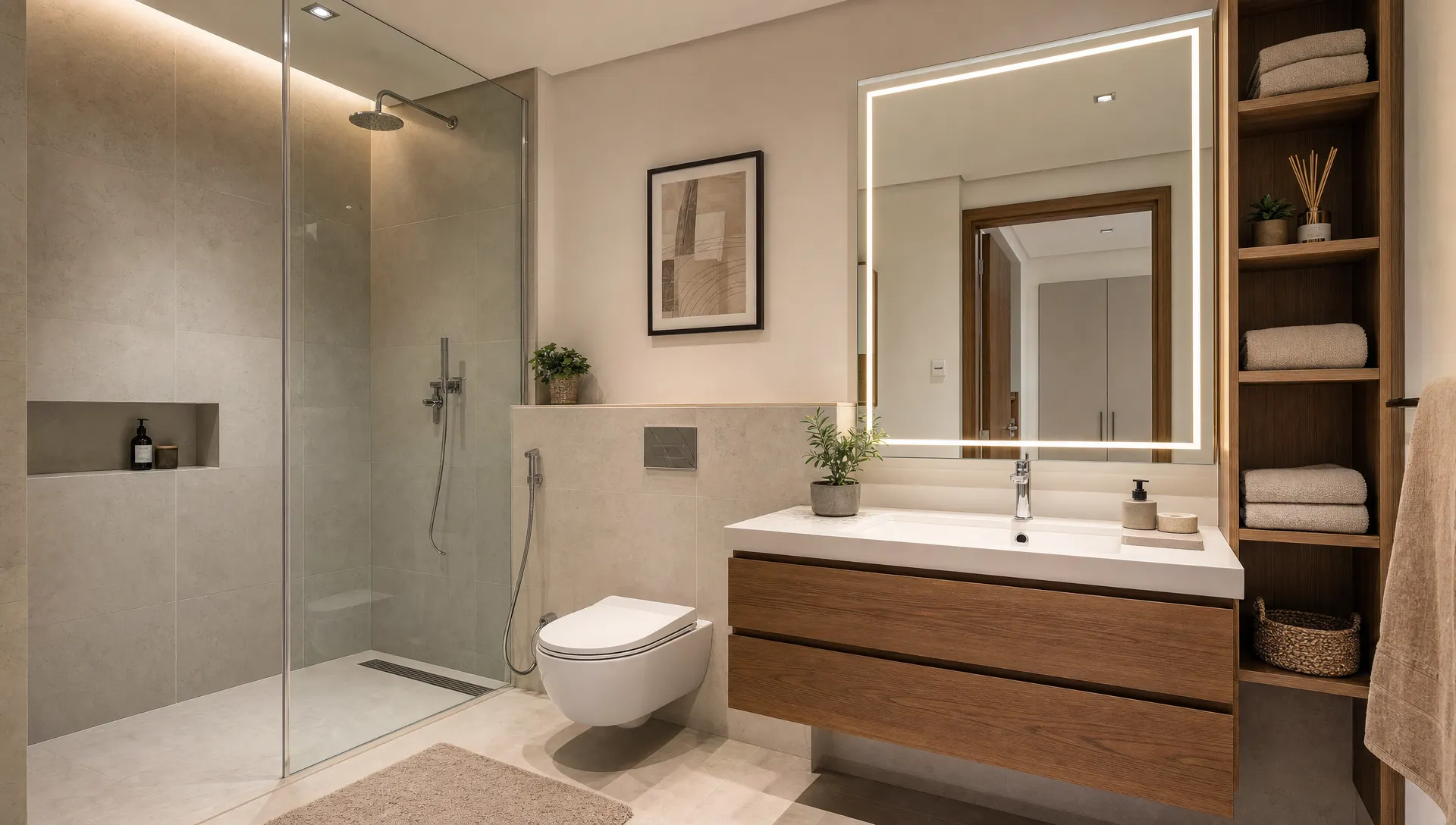
Material decisions should also consider maintenance. A bathroom with too many grooves, dark grout in hard-water areas or complex custom details may look impressive in photos but require more cleaning. A well-planned bathroom balances appearance with everyday practicality.
Step 7: Confirm approvals and building requirements
Approval requirements depend on the property type, location and scope of work. In an apartment, building management may need to approve working hours, material movement, debris removal, plumbing shutdowns, waterproofing procedures and noise control. In a villa community, developer or community management rules may apply, especially for external work or changes affecting services.
Structural changes, major plumbing changes and electrical modifications may require additional review. Your contractor should be familiar with local procedures and should not begin demolition until access, permissions and site rules are clear.
This step is not just paperwork. It protects you from complaints, fines, delays and forced rework. It also helps coordinate elevator use, parking, worker access and waste disposal before the project starts.
Step 8: Select the right renovation team
A bathroom remodel involves several trades working in the correct order. Demolition, civil work, plumbing, electrical, waterproofing, tiling, carpentry, glass installation and final fitting all need coordination. Hiring separate trades without a clear project lead can create gaps in responsibility, especially when something goes wrong between stages.
Look for a renovation company that asks detailed questions during the site visit and provides a written scope. The quote should describe what is included, what is excluded, the materials allowance if applicable and the expected sequence of work. A very low quote may be missing waterproofing, proper surface preparation, debris handling or final finishing.
For more guidance on evaluating teams, review Renovate UAE's advice on how to choose bathroom remodel contractors confidently before you compare quotations.
A strong contractor should be able to explain:
- How they will protect nearby rooms and existing finishes
- What waterproofing system they plan to use
- How plumbing and electrical changes will be handled
- Who supervises work on site
- How variations are approved
- What happens during handover and defect correction
If your remodel includes smart controls, app-connected lighting or a custom digital interface for a larger villa automation project, involve the relevant technology specialist early. For example, a homeowner developing a custom control app could consult an iOS and Android app developer alongside the renovation and smart-home teams so the digital experience is planned before walls and ceilings are closed.
Step 9: Finalize the design before demolition
Once demolition begins, changes become more expensive. Finalize the design package before work starts so the contractor knows exactly what to build and install. This does not mean every accessory must be purchased immediately, but key technical and finish decisions should be locked.
Your final design should include the approved layout, tile selection, sanitaryware sizes, vanity dimensions, faucet types, shower glass style, mirror position, lighting plan, socket locations and ceiling details. Check product lead times as well. Imported tiles, custom vanities, special mixers or large shower screens can delay completion if ordered too late.
A simple rule helps: anything that affects plumbing, electrical points, wall preparation or tile cutting must be chosen early. Changing a towel mixer to a concealed shower system after plumbing rough-in is not a small change. It affects wall depth, pipe routes, waterproofing and tiling.
Step 10: Prepare your home for renovation work
Bathroom remodeling creates dust, noise and temporary inconvenience. Planning your household routine reduces stress during construction. If the home has only one bathroom, discuss temporary use options and working hours in detail before signing. If you have multiple bathrooms, decide which one will remain in use and make sure materials and tools do not block daily access.
Protect nearby flooring, wardrobes, doors and corridors. In apartment buildings, confirm lift padding, service elevator booking and debris removal rules. In villas, plan where materials will be stored and how workers will access the bathroom without disturbing the rest of the property more than necessary.
Before demolition, remove personal items, toiletries, towels, wall decor and anything stored under the vanity. If there are valuable fixtures you want to keep, mark them clearly and discuss safe removal with the contractor.
Step 11: Monitor the critical stages, not every small task
You do not need to supervise every tile cut, but you should pay attention to the stages that affect long-term performance. The most important checkpoints are after demolition, after plumbing and electrical rough-in, after waterproofing, during tiling set-out and before final handover.
After demolition, review hidden conditions. This is when damaged pipes, uneven walls, weak screed or moisture problems become visible. After rough-in, confirm the location of mixers, drains, sockets and lights before walls are closed. After waterproofing, ask for photos or inspection before tiling begins. During tiling, check alignment, slope, grout width and cut placement.
| Project stage | What to check | Why it matters |
|---|---|---|
| After demolition | Wall and floor condition, old pipework, moisture signs | Confirms whether the original scope still works |
| Rough-in | Plumbing, drainage, electrical and fixture positions | Prevents expensive changes after tiling |
| Waterproofing | Coverage, corners, penetrations and test results | Reduces risk of leaks and damp issues |
| Tiling | Levels, slopes, alignment and cuts | Determines the final visual quality and drainage performance |
| Handover | Fixtures, silicone, water flow, drainage and cleaning | Ensures the bathroom is ready for daily use |
Clear communication is better than constant intervention. Agree on how updates will be shared, how variations will be priced and who approves design changes. Written approvals protect both homeowner and contractor.
Step 12: Complete handover and keep maintenance records
A bathroom remodel is not finished when the last tile is installed. Handover should include a practical inspection. Test all taps, shower mixers, drains, flush systems, exhaust fans, lights, sockets and cabinet doors. Run the shower long enough to check drainage. Look for water pooling, loose fittings, sharp edges, uneven silicone or missing grout.
Ask for care instructions for tiles, stone, glass, mixers and vanity finishes. If natural stone or special grout has been used, confirm cleaning products that are safe. Keep invoices, product warranties, waterproofing details and before-after photos in one folder. These records help with future maintenance, resale and any warranty discussions.
After the remodel, maintain the bathroom with regular ventilation, gentle cleaning products and prompt repair of small silicone or grout issues. Even a well-built bathroom needs care, especially in wet zones.
Bathroom remodel planning checklist
Use this checklist before you approve the final quote:
- You have defined the main goal of the remodel
- The existing bathroom has been measured and inspected
- The scope clearly states what will be removed and replaced
- Plumbing, drainage, waterproofing and ventilation are included where needed
- The layout has been checked for comfort and maintenance access
- Materials are suitable for wet areas and UAE conditions
- Building or community approvals have been clarified
- Key products have been selected before demolition
- The contractor has provided a written quote and timeline
- Handover checks and defect correction are understood
This checklist is not a substitute for professional assessment, but it helps you ask better questions and avoid vague quotations.
Frequently Asked Questions
How long does a bathroom remodel usually take? A straightforward bathroom remodel may take a few weeks once materials are available, while a full renovation with plumbing changes, waterproofing, custom joinery or approval requirements can take longer. The timeline depends on scope, building access, material lead times and site conditions.
Should I move the toilet or shower during a remodel? Move them only if the layout improvement justifies the extra work. Relocating drainage and water lines can increase cost, approval requirements and construction time, especially in apartments where service routes are restricted.
What should I prioritize if my budget is limited? Prioritize waterproofing, drainage, plumbing quality, ventilation and safe flooring before luxury finishes. These elements protect the bathroom from leaks, odors, mold and expensive future repairs.
Do I need approvals for a bathroom remodel in Dubai? It depends on your property and project scope. Many apartment buildings and villa communities require management approval for renovation work, access, noise, debris removal and service shutdowns. Structural, plumbing or electrical changes may require additional checks.
When should I buy tiles and fixtures? Choose key tiles, sanitaryware, mixers, drains and vanity dimensions before demolition starts. Early selection helps the contractor set plumbing points correctly and prevents delays caused by out-of-stock or imported items.
Plan your bathroom remodel with Renovate UAE
A well-planned bathroom remodel gives you more than a fresh look. It improves comfort, protects your property and adds daily value to your home. Renovate UAE provides bathroom renovation, villa remodeling, apartment upgrades, interior design, plumbing, electrical, carpentry, painting and finishing services across the UAE.
If you are planning a bathroom remodel and want a clear scope before work begins, book a free site visit and estimate with Renovate UAE. A professional assessment will help you understand the best layout, materials, timeline and renovation approach for your home.