


Choosing the right remodeling company is one of the most important decisions you will make before changing a villa, apartment, office or commercial space. The contractor you hire will influence the design, approvals, material quality, daily disruption, safety and final finish of your project.
For UAE property owners, the decision is even more practical. A remodel may involve building management rules, community guidelines, authority approvals, delivery restrictions, MEP coordination, civil works and premium finish expectations. A company that looks affordable on paper can become expensive if it misses these details.
This guide explains how to evaluate a remodeling company with confidence, from the first project brief to the final contract.
Start with a clear remodeling brief
Before contacting companies, define what you want the project to achieve. A vague brief leads to vague quotes, and vague quotes are hard to compare. You do not need a full design package at this stage, but you should know the core problem you are trying to solve.
A good remodeling brief should cover:
- Property type, such as villa, apartment, townhouse, office or retail space
- Rooms or areas included in the project
- Main goals, such as better layout, luxury finishes, extra storage, modern lighting or improved functionality
- Any known issues, such as outdated plumbing, poor ventilation, cracked tiles or water leakage
- Preferred style, materials and finish level
- Target budget range
- Desired start date and completion timeline
- Whether you will live or work in the space during renovation
- Any known building management, landlord or community restrictions
The more specific your brief, the easier it is for a remodeling company to give practical advice. It also helps you avoid being sold a solution that does not fit your actual needs.
If your project is focused on a kitchen, it is worth reviewing the key factors covered in this guide to choosing the right kitchen remodel company, since kitchen projects often involve cabinetry, appliances, plumbing, ventilation and electrical coordination.
Match the company to your project type
Not every remodeling company is suited to every project. A contractor that handles small repainting and tile replacement jobs may not be the best fit for a full villa transformation. Likewise, a company focused on luxury villas may not be the most efficient choice for a compact office upgrade.
Look for relevant experience, not just general renovation claims. Ask to see completed projects that match your property type, project size and finish expectations. If you are remodeling a villa in Dubai, examples of villa layouts, bathrooms, kitchens, staircases, landscaping and exterior upgrades are more useful than a few generic interior photos.
| Project type | What to verify before hiring |
|---|---|
| Villa renovation | Experience with layout changes, bathrooms, kitchens, exterior works, landscaping and multiple trades |
| Apartment remodeling | Knowledge of building rules, service lift timing, noise limits, plumbing constraints and compact-space planning |
| Kitchen upgrade | Cabinetry quality, countertop installation, appliance coordination, ventilation, lighting and MEP work |
| Bathroom remodel | Waterproofing approach, drainage, tile setting, sanitaryware installation and ventilation |
| Office or commercial space | Fit-out sequencing, access restrictions, safety, electrical load, branding and business continuity |
A strong remodeling company should be able to explain what makes your property type different. If they give the same answer for every project, they may not have enough practical experience.
Check licensing, approvals and local knowledge
Remodeling work in the UAE is not only about design and labor. Depending on the location, scope and property type, you may need approvals from building management, the developer, a community authority, a landlord, a free zone or the relevant municipality.
Ask each remodeling company how they handle approvals. You want clear answers, not vague reassurance. For example, they should know when structural changes, MEP modifications, waterproofing, drainage relocation, shop drawings or no-objection certificates may be required.
Useful questions include:
- Are you licensed to carry out this type of renovation work?
- Have you worked in this building, community or type of property before?
- Who prepares drawings, method statements or technical documents if required?
- Who coordinates with building management or community authorities?
- Are electrical, plumbing and civil works handled by qualified trades?
- What documents will I receive before work starts?
Local knowledge matters because delays often come from process issues, not construction issues. A remodeling company that understands UAE site access rules, delivery timing, waste removal and community working hours can plan the job more accurately.
Insist on a proper site visit
A remodeling quote prepared without a site visit should be treated as a rough estimate, not a reliable proposal. Photos and videos help, but they do not reveal everything. A site inspection allows the company to check dimensions, existing finishes, service points, access routes, electrical panels, plumbing locations, ceiling heights and potential hidden issues.
During the site visit, pay attention to how the team behaves. Do they ask questions about your lifestyle, business operations or design preferences? Do they inspect technical details or only discuss surface finishes? Do they explain possible constraints clearly?
A professional visit should feel consultative. The company should help you understand what is feasible, what may add cost and which decisions should be made early. Renovate UAE, for example, offers a free site visit and estimate for renovation projects, which helps property owners move from a rough idea to a more accurate scope.
If you are still building a shortlist, this practical guide on how to find reliable contractors for remodeling projects can help you screen companies before inviting them to your property.
Compare detailed quotes, not headline prices
The cheapest quote is not always the best value. In remodeling, a low price can hide missing items, weak materials, unrealistic labor allowances or vague specifications. Once the project starts, those gaps often turn into variations.
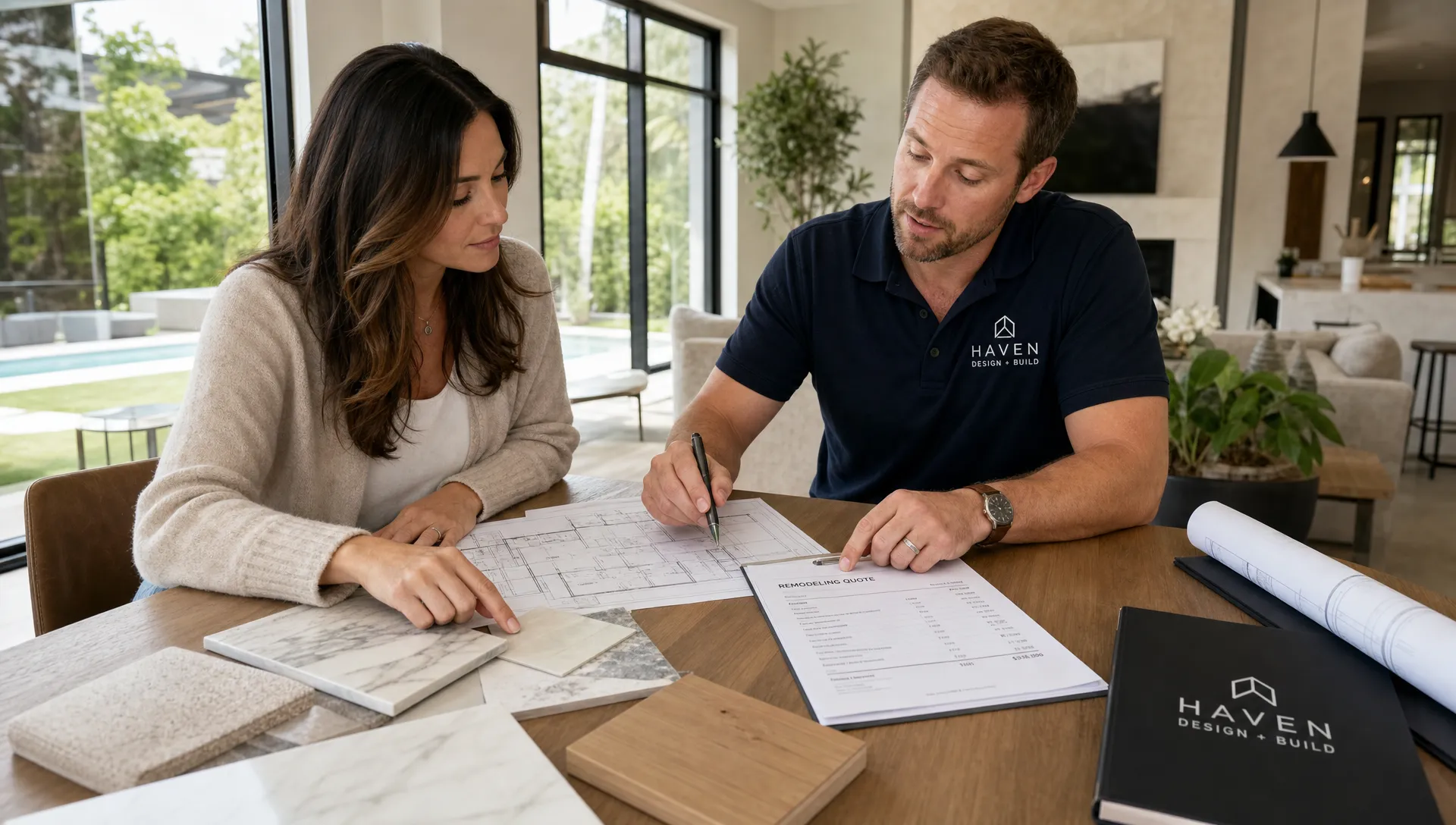
A serious remodeling company should provide a written proposal that breaks down the work. The quote should make it clear what is included, what is excluded and what assumptions were used. If two companies quote very different prices, compare the scope line by line before making a decision.
| Quote section | What it should include | Why it matters |
|---|---|---|
| Demolition and preparation | Removal work, protection, disposal and site preparation | Prevents disputes about who handles messy early-stage work |
| Civil works | Masonry, partitions, screed, ceilings or layout changes | Clarifies the structure of the remodel |
| MEP works | Electrical, plumbing, drainage, AC or lighting changes | Reduces hidden technical costs |
| Materials | Brand, grade, model, quantity or allowance | Makes finish quality easier to compare |
| Labor | Installation, supervision and trade work | Helps identify underpriced proposals |
| Timeline | Start date, duration and major milestones | Sets realistic expectations |
| Exclusions | Items not covered in the price | Prevents surprise charges later |
Allowances are especially important. If a quote includes a tile allowance, sanitaryware allowance or lighting allowance, check whether it matches the quality you expect. A luxury finish cannot be delivered on entry-level material allowances.
Evaluate design capability and technical coordination
A successful remodel needs more than labor. The company should be able to connect design decisions with site execution. A beautiful concept can fail if the plumbing route is not possible, the lighting plan is underpowered or the cabinetry measurements are wrong.
Ask how the remodeling company coordinates design, civil works, electrical, plumbing, carpentry, painting and finishing. Ideally, you want one accountable team or a clearly managed network of trades. Fragmented coordination increases the risk of delays and blame-shifting.
For luxury home renovation, design capability is particularly important. Materials, lighting, joinery, color palettes and space planning need to work together. A company that offers interior design solutions alongside renovation can help ensure the finished space feels cohesive rather than patched together.
You should also ask how material selections are documented. For example, tiles, countertops, paint colors, fittings, door hardware, lighting fixtures and cabinetry finishes should be confirmed before ordering. Written approvals reduce mistakes and make the final result easier to manage.
Look closely at workmanship standards
Photos are useful, but they do not always show quality. When reviewing a remodeling company portfolio, look beyond the overall style. Zoom in on tile alignment, grout lines, paint edges, cabinetry joints, countertop finishing, ceiling details, lighting placement and transitions between materials.
If possible, ask whether you can visit a completed project or see a current site. Not every client will allow this, but a company with strong workmanship should be comfortable showing real examples where possible.
Pay attention to how they discuss hidden quality as well. Waterproofing, substrate preparation, electrical safety, plumbing pressure, drainage slope and surface leveling are not always visible after completion, but they determine how well the renovation performs over time.
A polished handover photo means little if the bathroom leaks, the kitchen cabinets sag or the paint fails after a few months. Choose a company that can explain both the visible finish and the technical work behind it.
Review the project timeline realistically
Every property owner wants a fast renovation, but unrealistic timelines create pressure that affects quality. A remodeling company should give you a practical schedule based on scope, approvals, material availability and site access.
A villa renovation involving multiple bathrooms, kitchen upgrades, flooring, painting, carpentry and landscaping will naturally take longer than a single-room refresh. Imported materials, custom joinery and authority approvals can also affect timing.
Ask for a simple project timeline with major milestones. It does not need to predict every hour on site, but it should show the expected sequence of work. Demolition, civil works, MEP rough-in, waterproofing, tiling, ceiling work, carpentry, painting, fixture installation and final snagging must happen in a logical order.
You should also discuss what happens if the scope changes. Variations are common in remodeling, especially when hidden conditions are discovered. The difference between a professional and disorganized company is how clearly those changes are documented, priced and approved.
Check the contract before paying a deposit
Do not rely on verbal promises. A remodeling contract protects both sides by defining the scope, payment terms, timeline, responsibilities and quality expectations.
Before signing, confirm that the contract or accepted proposal includes the company details, project address, agreed scope, drawings or specifications, material selections or allowances, payment schedule, estimated timeline, variation process, warranty terms where applicable and handover process.
Payment schedules should be tied to project progress. Be cautious if a company asks for a very large upfront payment without clear procurement or mobilization reasons. At the same time, understand that contractors often need deposits to reserve teams, order materials and begin planning.
For a more detailed comparison process, this article on how to compare local remodelers before you hire can help you evaluate proposals more objectively.
Watch for red flags
Some warning signs appear early if you know what to look for. A remodeling company does not need to be perfect in the first conversation, but it should be organized, transparent and realistic.
Red flags include:
- Refusing to provide a written scope or itemized quote
- Giving a firm price without visiting the site
- Avoiding questions about licensing, approvals or technical work
- Pressuring you to sign immediately
- Offering unusually low prices without explaining the difference
- Using unclear material descriptions such as premium quality without brands, grades or specifications
- Having poor communication before the project even starts
- Promising an unrealistic timeline for a complex remodel
- Blaming every possible delay on others before planning the job properly
Trust your judgment. If communication is confusing before you pay, it is unlikely to improve once work begins.
Ask the right final questions
Before choosing a remodeling company, have one final conversation with your top candidates. The goal is not to interrogate them, but to confirm that expectations are aligned.
| Question | What a good answer should show |
|---|---|
| Who will manage my project day to day? | Clear accountability and a defined point of contact |
| What happens if hidden issues are found? | A documented variation process and practical problem-solving |
| How will materials be approved? | Written selections, samples or clear specifications |
| How do you protect the property during work? | Planning for dust, access, floors, elevators and surrounding areas |
| What is the handover process? | Snagging, final checks and completion documentation |
| How do you communicate progress? | Regular updates and a predictable contact method |
The best remodeling company for your project is not simply the one with the best photos or lowest price. It is the one that understands your goals, explains the process clearly, manages the technical details and gives you confidence that the finished space will match the agreed scope.
Frequently Asked Questions
How do I know if a remodeling company is reliable? A reliable remodeling company provides a clear written scope, inspects the site before quoting, communicates consistently, explains approvals and can show relevant project experience. You should also feel that the company understands your property type and renovation goals.
Should I choose the cheapest remodeling quote? Not always. A cheaper quote may exclude materials, approvals, technical work or proper finishing. Compare the scope, material specifications, timeline and exclusions before deciding which proposal offers the best value.
Do I need approvals for a remodeling project in Dubai or the UAE? It depends on the property, location and scope. Building management, developers, landlords, community authorities or municipalities may require approvals for certain works, especially structural, MEP or layout changes. Your remodeling company should guide you based on the project.
What should be included in a remodeling contract? The contract should include the agreed scope, project address, specifications, material allowances or selections, payment terms, timeline, variation process, responsibilities and handover process. Written details help prevent misunderstandings.
How early should I contact a remodeling company? Contact companies once you have a basic brief, budget range and target timeline. For larger villa, apartment or commercial renovations, starting earlier gives more time for design, approvals, material selection and scheduling.
Plan your renovation with the right team
Choosing a remodeling company is easier when you focus on evidence, not sales promises. Look for relevant experience, a proper site visit, transparent pricing, strong technical coordination and clear communication.
Renovate UAE provides villa renovation, home and apartment remodeling, kitchen and bathroom upgrades, interior design, civil work, electrical and plumbing services, carpentry, painting and landscaping across the UAE. If you are planning a renovation, you can request a free site visit and estimate through Renovate UAE and discuss a customized solution for your space.