


A full home upgrade is not just a bigger version of repainting a room or replacing a few tiles. It is a coordinated project that can touch the structure, layout, electrical systems, plumbing, air conditioning, flooring, ceilings, bathrooms, kitchen, joinery, lighting, landscaping, and final styling of the home.
That is why experienced house remodel contractors manage full home upgrades as a sequence of connected decisions rather than a collection of separate jobs. In the UAE, where many properties are villas, premium apartments, and community-managed homes, good coordination is what keeps a renovation moving safely, legally, and as close to plan as possible.
Below is how professional contractors typically manage a complete home upgrade from first site visit to final handover, and what homeowners should expect at each stage.
Why full home upgrades need more than individual trades
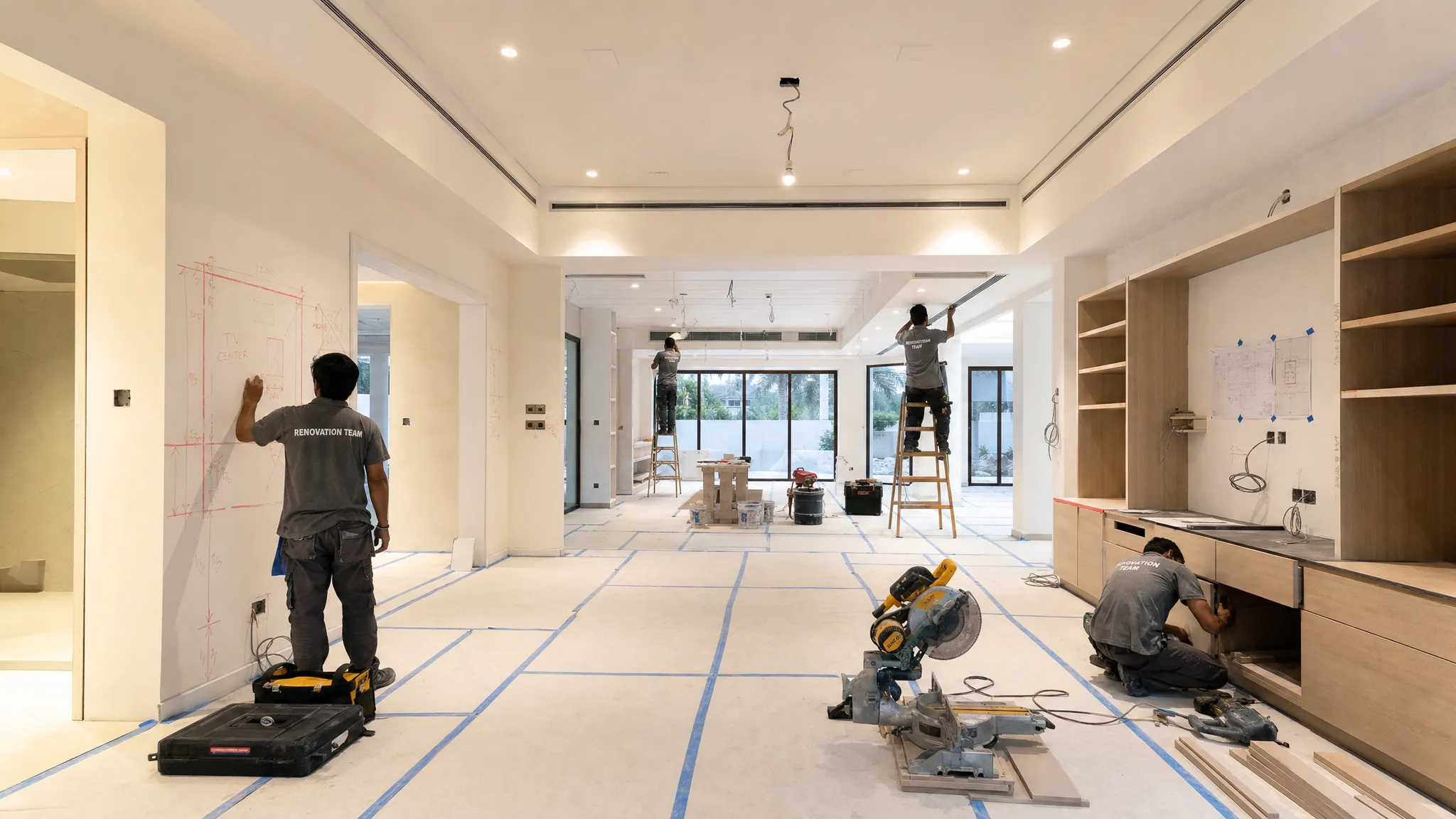
A full home remodel usually involves multiple specialists working in the same space. Civil workers may be opening walls while electricians are rerouting wiring, plumbers are preparing new wet areas, carpenters are measuring for wardrobes, and painters are waiting for surfaces to cure. If these teams are not coordinated, the project can quickly run into delays, rework, cost overruns, and quality issues.
A house remodel contractor acts as the central project manager. Instead of asking the homeowner to coordinate every trade, the contractor aligns the design, technical requirements, approvals, materials, schedule, site safety, and workmanship standards.
This is especially important in UAE homes where upgrades often include luxury finishes, custom joinery, larger bathrooms, open-plan living areas, outdoor improvements, and upgraded MEP systems. If you are unsure whether your project is large enough to require one central team, Renovate UAE has a helpful guide on when to bring a general contractor into a home remodel.
The process starts with a detailed site assessment
Before design boards, material samples, or cost estimates, reliable contractors begin with a physical inspection of the property. This is where they identify what is possible, what needs technical review, and what may affect the budget.
A proper site assessment usually looks at the condition of existing walls, floors, ceilings, bathrooms, kitchens, doors, windows, outdoor areas, and service routes. The contractor also checks practical issues such as access for workers, parking, delivery routes, waste removal, lift usage in apartment buildings, and working-hour restrictions set by communities or building management.
For villas, the assessment may include landscaping, boundary walls, external paint, drainage, outdoor lighting, pergolas, swimming pool surroundings, and façade condition. For apartments, the contractor pays closer attention to building rules, shared services, noise restrictions, waterproofing risks, and vertical access.
The goal is to prevent assumptions. A remodel that looks simple on the surface may require electrical upgrades, plumbing rerouting, AC modifications, or waterproofing work once finishes are removed.
Contractors convert the homeowner’s vision into a workable scope
Many homeowners begin with a clear style goal, such as a modern villa interior, a brighter open-plan layout, a hotel-inspired bathroom, or a more functional family kitchen. The contractor’s job is to translate that vision into a realistic scope of work.
This scope should define what will be demolished, rebuilt, replaced, repaired, upgraded, supplied, installed, tested, and handed over. It should also separate fixed work from optional upgrades so the homeowner can make informed decisions.
A strong scope may include:
- Civil work, wall modifications, ceiling changes, and floor preparation
- Electrical upgrades, lighting layout, switches, sockets, and smart home provisions
- Plumbing, drainage, sanitaryware installation, and water heater coordination
- Kitchen remodeling, cabinetry, countertops, appliances, and backsplash finishes
- Bathroom upgrades, waterproofing, tiling, ventilation, mirrors, and vanity units
- Carpentry, wardrobes, wall panels, doors, TV units, and storage solutions
- Painting, decorative finishes, exterior coatings, and final touch-ups
- Landscaping, outdoor flooring, lighting, irrigation adjustments, and garden features
This is also where homeowners should be honest about lifestyle needs. A family with young children, frequent guests, pets, live-in staff, or home office requirements will need a different plan from a couple renovating for resale value or luxury entertaining.
Design and technical planning happen together
In a successful full home upgrade, design is not separated from technical planning. Beautiful finishes only work if they are supported by the right substrate, lighting, plumbing, ventilation, and installation method.
For example, a floating vanity needs wall support and accurate plumbing positions. A feature ceiling needs proper access for AC servicing and lighting drivers. Large-format tiles need a well-prepared surface and careful leveling. A luxury kitchen island may require electrical points, plumbing, drainage, stone support, appliance clearance, and comfortable circulation space.
Professional house remodel contractors bring these details together early. They help homeowners choose materials and layouts that look good, fit the property, and can be installed correctly. When needed, they coordinate drawings, mood boards, samples, measurements, and technical specifications before procurement begins.
This planning stage is also where value engineering can happen. Value engineering does not mean choosing the cheapest option. It means finding the best balance between appearance, performance, maintenance, and budget. A contractor may suggest using a premium finish in high-impact areas while choosing more practical materials in secondary spaces.
Approvals, permissions, and risk checks come before site work
In the UAE, renovation requirements vary depending on the emirate, property type, community, developer, and building management rules. Some projects may require approvals before demolition, layout changes, MEP modifications, façade work, or major wet-area alterations.
A responsible contractor helps identify which approvals may be needed and what documents or drawings should be prepared. This can reduce the risk of work stoppages, complaints, or forced corrections later in the project.
Homeowners should also review practical risk protections before work begins. This may include checking community guidelines, confirming contractor responsibilities, protecting valuable belongings, and understanding what is covered by existing home policies. Before a major renovation, it can be useful to compare home insurance options in the UAE so your coverage aligns with the property and your renovation plans.
| Planning area | What the contractor manages | Why it matters |
|---|---|---|
| Scope definition | Rooms, systems, finishes, exclusions, and optional upgrades | Reduces confusion and prevents missed items |
| Technical review | MEP routes, waterproofing, AC impact, wall changes, and site constraints | Helps avoid unsafe or impractical design choices |
| Approvals | Community, building, or authority requirements where applicable | Reduces the risk of delays and compliance problems |
| Procurement | Material selections, lead times, quantities, and delivery sequencing | Keeps site progress from stopping due to missing items |
| Quality control | Inspections, testing, snagging, and final handover checks | Protects finish quality and long-term performance |
The renovation schedule is built around dependencies
A full home upgrade cannot be scheduled room by room without considering dependencies. Some work must happen before other work can begin. If the sequence is wrong, finished areas may need to be reopened, materials can be damaged, and the timeline can stretch.
Professional contractors usually build a master schedule that starts with protection and demolition, then moves into civil work, MEP rough-ins, waterproofing, ceiling framing, flooring preparation, tiling, joinery installation, painting, fixture installation, testing, cleaning, and snagging.
The schedule also accounts for lead times. Imported tiles, custom doors, stone countertops, sanitaryware, decorative lighting, and bespoke cabinetry may need to be ordered well before the site is ready for installation. If these items are selected too late, the contractor may have workers ready but no materials to install.
Good scheduling is one reason homeowners often prefer a single accountable renovation team. As Renovate UAE explains in its article on stress-free renovation project planning, organized planning reduces uncertainty and helps each stage flow into the next.
Trade coordination keeps the site efficient
On a full remodel, many trades depend on each other. Electricians need to know the lighting design before ceilings are closed. Plumbers need vanity and sanitaryware specifications before wall tiles are finished. Carpenters need final site measurements after plastering and flooring levels are confirmed. Painters need surfaces dry, clean, and repaired before applying final coats.
The contractor’s site supervisor or project manager keeps these trades aligned. They confirm measurements, sequence teams, inspect completed work, and solve issues before they affect the next stage.
This coordination is particularly important in luxury renovations because small alignment errors can be very visible. A mispositioned light over a dining table, uneven tile joint, poorly aligned wardrobe panel, or mismatched paint touch-up can reduce the quality of the final result.
Quality control focuses on what you see and what you do not see
Homeowners naturally notice visible finishes first: flooring, paint, cabinetry, countertops, fixtures, and lighting. But long-term renovation quality often depends on hidden work.
Waterproofing under bathroom tiles, pipe joints behind walls, electrical connections above ceilings, AC duct sealing, drainage slopes, wall preparation, and floor leveling all affect how the home performs after handover. Once finishes are installed, hidden defects become expensive and disruptive to fix.
This is why professional house remodel contractors inspect work at critical stages rather than only at the end. For example, wet areas should be checked before tiling, electrical points should be verified before closing ceilings, and joinery measurements should be confirmed after final wall and floor levels are ready.
A good contractor also understands that luxury finishing requires patience. Paint may need proper drying time, tiles need accurate setting and grouting, silicone lines should be neat, and custom joinery should be adjusted carefully on site.
Budget management is handled through clarity and change control
Full home upgrades can become expensive when the original scope is vague or changes are made informally. A professional contractor manages the budget by documenting what is included, what is excluded, what is provisional, and what requires homeowner approval before proceeding.
This does not eliminate all changes. Renovations can reveal hidden issues, especially in older properties. Damaged plumbing, uneven floors, moisture problems, weak surfaces, or outdated wiring may only become visible after demolition. The difference is how those issues are handled.
A disciplined contractor explains the issue, proposes options, provides cost and time impact, and gets approval before adding work. This protects both the homeowner and the project team.
| Common cost risk | How contractors reduce surprises |
|---|---|
| Unclear scope | Provide detailed room-by-room work descriptions |
| Late material selections | Set deadlines for tiles, fixtures, paint, joinery, and lighting decisions |
| Hidden site defects | Inspect early and communicate findings with photos or site meetings |
| Informal design changes | Use written variation approvals before extra work begins |
| Poor sequencing | Build a schedule that respects technical dependencies |
Communication prevents small issues from becoming major problems
Even with a strong plan, full home upgrades involve many decisions. Homeowners may need to approve samples, choose grout colors, confirm lighting temperatures, decide on door hardware, review joinery drawings, or select final paint shades.
Good contractors create a communication rhythm. This may include regular site updates, progress photos, scheduled walkthroughs, approval checklists, and clear points of contact. The homeowner should always know what stage the project is in, what decisions are pending, and whether any issue affects cost or timeline.
Clear communication is also important for occupied homes. If the family continues living in the property during part of the renovation, the contractor must plan dust control, access routes, temporary utilities, safe storage of tools, and work zones. In many cases, however, a full home upgrade is easier and faster when the property is vacant during the most disruptive phases.
Procurement is planned to protect quality and timelines
Material procurement is one of the most underestimated parts of a renovation. A contractor must confirm quantities, check product availability, order materials in the right sequence, and inspect deliveries for damage or mismatch.
For premium home upgrades, procurement can include tiles, stone, sanitaryware, mixers, lighting, switches, kitchen fittings, appliances, door hardware, paint systems, wallpaper, outdoor materials, and custom joinery finishes. If one key item is delayed, several trades may be affected.
Contractors also help homeowners avoid poor substitutions. If the selected tile, fitting, or fixture is unavailable, a replacement should be reviewed for size, color, performance, compatibility, and installation requirements before being approved.
In the UAE climate, material suitability matters. Outdoor finishes must handle heat, dust, and sun exposure. Bathroom products should be chosen with moisture resistance in mind. Paints, sealants, adhesives, and exterior coatings should suit the application area.
The final stage includes testing, snagging, and handover
A professional renovation is not complete when the last coat of paint is applied. The final phase includes testing systems, cleaning the site, correcting defects, and handing over the home in usable condition.
Common handover checks include lighting, switches, sockets, water pressure, drainage, sanitaryware, doors, drawers, locks, AC airflow, paint touch-ups, tile alignment, silicone finishing, joinery adjustments, appliance installation, and exterior details.
Snagging is a normal part of the process. It allows the homeowner and contractor to identify minor issues before final completion. The best contractors treat snagging as a quality-control step, not an argument.
Homeowners should also ask for relevant product information, warranty documents where applicable, maintenance guidance, and care instructions for special finishes. Luxury surfaces such as marble, wood veneer, microcement, exterior paint, and custom metalwork may need specific cleaning or maintenance methods.
How homeowners can help the contractor deliver better results
A full home upgrade works best when the homeowner and contractor operate as partners. The contractor manages the technical process, but the homeowner’s decisions still shape the outcome.
To keep the project moving smoothly, homeowners should make major design decisions early, approve materials on time, avoid frequent scope changes, keep communication clear, and give the contractor access to the property as agreed. It also helps to appoint one decision-maker in the household so approvals are not delayed by conflicting opinions.
Before signing, homeowners should compare more than the final price. Review the contractor’s relevant experience, scope detail, communication style, site inspection process, and ability to manage multiple trades. A cheaper quote can become expensive if it leaves out key work or lacks proper supervision.
Frequently Asked Questions
What do house remodel contractors do during a full home upgrade? They coordinate the full renovation process, including site assessment, scope planning, design coordination, approvals, trade scheduling, procurement, supervision, quality checks, snagging, and handover.
How long does a full home remodel take in the UAE? Timelines vary depending on property size, scope, approvals, material availability, and whether structural or MEP changes are involved. A cosmetic refresh may be relatively quick, while a full villa upgrade with bathrooms, kitchen, joinery, landscaping, and MEP work can take significantly longer.
Do I need approvals for a full home renovation in Dubai or the UAE? Many projects require some form of approval, especially in managed communities, apartment buildings, or renovations involving layout changes, wet areas, façades, or services. Requirements depend on the property and location, so your contractor should check before work begins.
Can I live in my home during a full remodel? It depends on the scope. Minor phased work may allow partial occupancy, but major upgrades involving demolition, dust, plumbing shutdowns, electrical work, or multiple wet areas are usually easier and safer when the home is vacant.
How do contractors control renovation costs? They manage costs through a clear scope, detailed material selections, documented exclusions, procurement planning, scheduled approvals, and written variation orders for changes or hidden site conditions.
Plan your full home upgrade with the right team
A successful full home renovation depends on planning, coordination, workmanship, and communication. From villa renovation and apartment remodeling to kitchens, bathrooms, interiors, civil work, electrical, plumbing, carpentry, painting, and landscaping, the right contractor keeps every part of the project connected.
If you are planning a full home upgrade in Dubai or elsewhere in the UAE, Renovate UAE can help with customized renovation solutions, high-quality materials, modern finishes, and a free site visit and estimate.