


Planning a bathroom remodel in Dubai is not just about choosing tiles and fixtures. The best results come from decisions made before demolition begins: how the space will be used, what approvals may be required, how plumbing and waterproofing will be handled, and which finishes can stand up to daily use in the UAE climate.
For homeowners, the goal is usually simple: create a bathroom that feels cleaner, more comfortable, more modern, and easier to maintain. The planning process, however, needs to be structured. A rushed remodel can lead to hidden leaks, poor drainage, mismatched materials, delays with building management, or a finished bathroom that looks good but does not work well for your routine.
If you are searching for bathroom remodel near me and comparing renovation options in Dubai, use the tips below to plan with confidence and avoid expensive rework.
Start With the Real Reason for the Remodel
Before choosing a design style, identify what is driving the renovation. A family bathroom in a villa needs different planning from a compact apartment ensuite, a guest powder room, or a master bathroom designed as a spa-style retreat.
Ask what is not working today. Is the shower too cramped? Is storage limited? Are tiles dated? Is there water pooling near the drain? Does the lighting make grooming difficult? Are there signs of mold, cracked grout, or ceiling leaks below the bathroom? These answers shape the scope far more than inspiration photos.
A clear scope also helps you avoid budget drift. If your main problem is a poor layout, cosmetic changes alone will not solve it. If the layout works but the bathroom feels old, you may only need new tiles, fixtures, vanity, lighting, and accessories. The more precise your brief, the easier it becomes to compare contractor recommendations and quotations.
Understand Dubai-Specific Renovation Considerations
Bathroom remodeling in Dubai often involves building rules, community guidelines, service access, and coordination with management. This is especially important in apartments, townhouses, and gated communities where noisy work, debris removal, parking, elevator use, and working hours may be controlled.
Villa owners usually have more flexibility, but they still need to plan carefully if the remodel affects drainage lines, waterproofing, electrical points, ventilation, or civil work. In apartments, changing the toilet or shower location can be more complex because drainage slopes and slab penetrations may be restricted.
Before work begins, confirm who will handle approvals or permissions if they are required. Building management may ask for contractor documents, method statements, work schedules, or protection plans for common areas. Planning this early helps prevent avoidable delays after materials have already been ordered.
Build a Budget Around the Full Scope, Not Just the Finishes
Many homeowners start by pricing tiles, sanitaryware, and faucets. These are important, but they are only part of the total cost. A bathroom remodel also includes demolition, disposal, waterproofing, plumbing adjustments, electrical work, ceiling work, ventilation, lighting, carpentry, painting, silicone sealing, and final cleaning.
The most reliable budget is built around the finished outcome. For example, a premium-looking bathroom can often be achieved with smart lighting, a better vanity, large-format tiles, and elegant fixtures, even without moving every plumbing point. For cost-conscious planning, Renovate UAE has also shared budget bathroom renovation ideas that feel premium that can help you prioritize high-impact upgrades.
| Budget item | Why it matters | Planning tip |
|---|---|---|
| Demolition and disposal | Old tiles, fixtures, and debris must be removed safely | Confirm whether disposal is included in the quote |
| Plumbing work | Poor pipe planning can cause leaks, low pressure, or drainage issues | Decide early if fixtures are staying or moving |
| Waterproofing | This protects floors, walls, and neighboring areas from moisture damage | Do not treat waterproofing as an optional saving |
| Electrical and lighting | Bathrooms need safe, practical lighting and compliant electrical placement | Plan mirror lights, ceiling lights, exhaust fans, and sockets together |
| Tiles and installation | Tile size and pattern affect labor, wastage, and final appearance | Order extra material for cuts, future repairs, and breakage |
| Vanity and storage | Storage affects daily comfort and visual neatness | Measure doors, drawers, and clearance before ordering |
| Finishing details | Accessories, mirrors, silicone, grout color, and hardware complete the look | Include these in the budget from the beginning |
A useful rule is to keep a contingency allowance for hidden issues. Once tiles are removed, contractors may discover damaged waterproofing, corroded pipes, uneven walls, or previous repair work that was not visible during the initial inspection.
Plan the Layout Before Falling in Love With Materials
A beautiful bathroom can still feel frustrating if the layout is wrong. The best layout supports natural movement, keeps wet and dry zones logical, and leaves enough space for doors, drawers, shower screens, and towel access.
Start by identifying fixed points. In many Dubai homes, drainage locations, structural walls, and existing pipe routes influence what can be changed. Moving a basin is usually easier than relocating a toilet. Converting a bathtub to a walk-in shower may be practical, but it still needs correct drainage slope, waterproofing, and glass partition planning.
Think about daily use. If two people use the bathroom in the morning, double storage or a wider vanity may be more useful than a larger shower. If it is a children’s bathroom, non-slip surfaces, easy-clean finishes, and accessible storage matter. If it is a guest bathroom, visual impact and low-maintenance materials may be the priority.
Prioritize Waterproofing, Drainage, and Ventilation
The areas homeowners cannot see after completion are often the areas that matter most. Waterproofing, drainage, and ventilation determine whether the remodel performs well over time.
Waterproofing should be planned around wet areas, floor levels, wall junctions, pipe penetrations, and shower zones. Drainage needs the right slope so water flows properly instead of pooling. Ventilation helps reduce humidity, odors, and moisture buildup, especially in bathrooms without large windows.
This is where professional workmanship is essential. A bathroom may look complete on handover day, but weak waterproofing or careless pipework can create major problems months later. If you are still comparing teams, this guide on how to choose bathroom remodeling contractors in Dubai explains what to check before hiring.
Choose Materials That Match Dubai Living
Bathrooms in Dubai need finishes that can handle humidity, frequent cleaning, air conditioning changes, and daily use. The right material choices reduce maintenance and keep the space looking fresh longer.
Porcelain tiles are a common choice because they are durable and available in many finishes. Large-format tiles can create a more seamless, luxury look, but they require careful surface preparation and skilled installation. Natural stone can look beautiful, but it may need sealing and more maintenance. For vanities, moisture-resistant materials and quality hardware are important, especially in bathrooms used every day.
| Area | Common planning mistake | Better approach |
|---|---|---|
| Shower floor | Choosing glossy tiles that become slippery when wet | Use slip-resistant floor tiles suitable for wet areas |
| Vanity | Selecting a design based only on appearance | Check storage depth, water resistance, and maintenance needs |
| Mirror wall | Forgetting task lighting | Add lighting that supports shaving, makeup, and grooming |
| Grout | Choosing a color without considering cleaning | Use a grout tone and quality suited to the tile and usage level |
| Fixtures | Mixing finishes without a plan | Keep metal finishes consistent or intentionally coordinated |
| Ceiling | Ignoring moisture exposure | Use bathroom-suitable paint and ventilation planning |
Design for Routine, Not Only for Photos
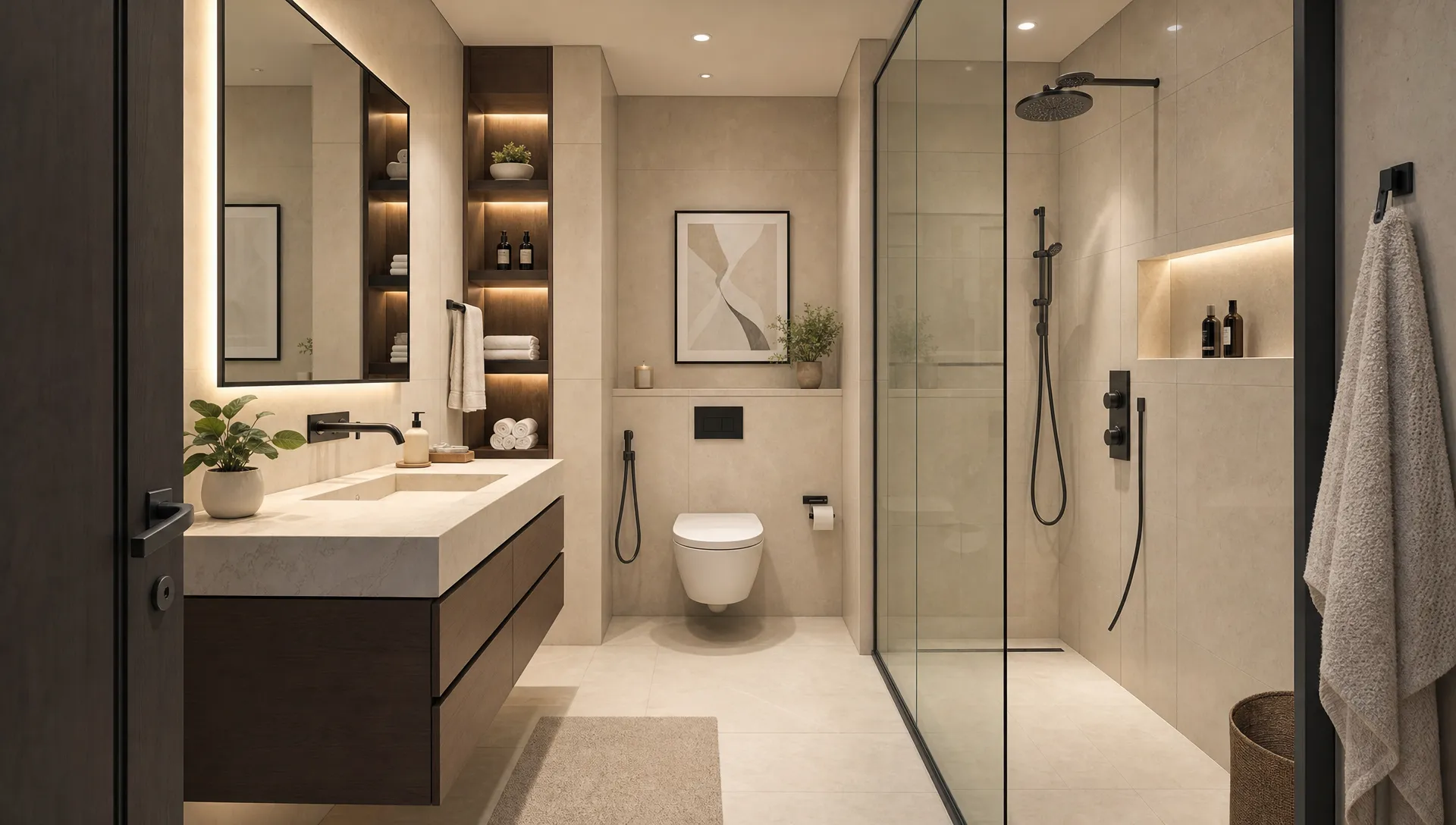
A bathroom should look refined, but it also needs to support your morning and evening routine. Think through where each item will live: towels, hair tools, skincare, cleaning products, spare toiletries, laundry, and daily grooming items.
Small details make a major difference. Recessed shower niches reduce clutter. A floating vanity makes the floor easier to clean. A mirrored cabinet adds storage without visually crowding the room. Warm layered lighting can make the space feel more relaxing at night, while clear task lighting helps during the day.
Finishing touches should be intentional rather than excessive. A tray on the vanity can organize perfume, watches, or everyday accessories, and a few well-chosen personal items can make the bathroom feel more luxurious. For homeowners who prefer understated styling, minimalist accessories from brands such as LUMOIR Jewelry can complement a clean, modern vanity setup without adding visual clutter.
Decide What Adds Long-Term Value
A bathroom remodel can improve daily comfort and property appeal, but not every upgrade adds equal value. The best value usually comes from improvements that combine function, durability, and timeless design.
Walk-in showers, quality sanitaryware, strong ventilation, practical storage, good lighting, and neutral premium finishes tend to age well. Highly unusual colors or trend-heavy fixtures may feel exciting now but can date quickly. If resale or rental appeal matters, aim for a design that feels elevated but not too personal.
For more inspiration on balancing appearance and practicality, you can explore Renovate UAE’s guide to bathroom remodeling services that add style and value.
Compare Contractors by Process, Not Just Price
A lower quote is not always a better quote. It may exclude waterproofing, disposal, premium materials, proper electrical work, or finishing items. When comparing contractors, ask for a clear breakdown so you understand what is included.
A professional bathroom remodeling team should inspect the site, discuss your goals, review technical constraints, and explain the work sequence. They should also be able to coordinate civil work, plumbing, electrical, tiling, carpentry, and finishing so that the project does not depend on disconnected trades working without a shared plan.
Look for clarity in these areas:
- Scope of work and exclusions
- Material specifications and brands where relevant
- Waterproofing method and coverage areas
- Timeline and working hours
- Protection of existing floors, doors, lifts, and common areas
- Waste removal and site cleaning
- Payment schedule and variation process
Trust also matters. You are giving a team access to your home, and bathroom renovation involves hidden systems behind walls and floors. Choose a contractor who communicates clearly before the project starts, not only after problems appear.
Set a Realistic Timeline
A bathroom remodel timeline depends on the scope. A cosmetic refresh may be completed faster than a full strip-out with plumbing changes, waterproofing, tiling, ceiling work, electrical changes, custom vanity installation, and glass partition fitting.
The sequence matters because some steps cannot be rushed. Waterproofing needs proper application and curing. Tiles need accurate setting and grouting. Custom items may have production lead times. Shower glass often requires final measurements after tiling is complete.
| Project phase | What usually happens | Homeowner decision needed |
|---|---|---|
| Site visit and brief | Measurements, inspection, goals, and constraints are reviewed | Confirm priorities and must-have features |
| Design and quotation | Scope, materials, and budget are developed | Approve design direction and inclusions |
| Procurement | Tiles, fixtures, vanity, lighting, and accessories are sourced | Finalize finishes before demolition |
| Demolition and preparation | Old materials are removed and surfaces are prepared | Approve any changes if hidden issues appear |
| MEP and waterproofing | Plumbing, electrical, drainage, and waterproofing are handled | Confirm fixture positions before closing walls |
| Tiling and installation | Tiles, sanitaryware, vanity, lighting, and glass are installed | Review alignment, finish details, and storage function |
| Handover | Snagging, cleaning, and final checks are completed | Test drainage, water flow, lighting, and ventilation |
Good planning reduces downtime. If you only have one main bathroom, discuss temporary arrangements and scheduling before work begins. If you are remodeling multiple bathrooms, it may be better to phase the work rather than losing access to all bathrooms at once.
Confirm Fixtures, Finishes, and Measurements Early
Late decisions are one of the biggest causes of delays. A tile that is out of stock, a vanity that does not fit, or a shower mixer that requires different plumbing can affect the entire schedule.
Before demolition, confirm tile sizes, sanitaryware, mixer types, vanity dimensions, mirror placement, lighting positions, towel rail location, shower screen style, drain type, and accessory placement. Also check door swings, drawer clearance, and the distance between fixtures.
Do not rely only on showroom displays. A basin that looks elegant in a large showroom may feel oversized in a compact apartment bathroom. A black fixture finish may look striking, but it may show water spots more visibly depending on cleaning habits and water conditions. Match every selection to your real space and maintenance expectations.
Avoid the Most Common Bathroom Remodel Mistakes
Many bathroom renovation problems are preventable. The most common issues happen when homeowners focus on surface design while underestimating technical planning.
Avoid starting without a complete scope. Avoid choosing the cheapest quote without checking inclusions. Avoid changing plumbing locations without understanding drainage limits. Avoid selecting slippery tiles for wet floors. Avoid placing lighting only in the ceiling and forgetting the mirror area. Avoid ordering custom vanities before final site measurements.
Another common mistake is ignoring storage. Minimal bathrooms look beautiful when empty, but daily life quickly introduces toiletries, towels, grooming tools, and cleaning items. Plan concealed storage so the finished space stays calm and uncluttered.
A Practical Pre-Remodel Checklist
Use this checklist before approving your bathroom remodel plan:
- Define the main reason for renovation and your top priorities
- Confirm whether layout changes are needed or if a refresh is enough
- Check building, community, or management requirements
- Set a realistic budget with a contingency allowance
- Finalize plumbing, electrical, lighting, and ventilation plans
- Choose tiles, sanitaryware, vanity, mirror, and fittings before work starts
- Confirm waterproofing scope and drainage planning
- Review the contractor’s quotation, timeline, and exclusions
- Plan temporary bathroom access if needed
- Keep all approvals, drawings, product selections, and payment details organized
A bathroom remodel is much easier to manage when decisions are documented. Even a simple folder with measurements, product links, tile references, and approved drawings can reduce misunderstandings during the project.
Frequently Asked Questions
How long does a bathroom remodel take in Dubai? The timeline depends on the size and scope. A light refresh may be quicker, while a full remodel with demolition, waterproofing, plumbing, tiling, custom vanity work, and glass installation takes longer. Your contractor should provide a project-specific schedule after the site visit.
Do I need approval to remodel a bathroom in Dubai? It depends on the property type, community rules, and scope of work. Apartments and managed communities often require building management approval, especially for noisy work, debris removal, or changes involving plumbing and electrical systems.
What should I decide before requesting a quote? Decide your goals, preferred style, budget range, must-have features, and whether you want to change the layout. You do not need every product selected immediately, but a clear brief helps contractors quote more accurately.
Can I remodel a bathroom without changing the layout? Yes. Keeping the same plumbing layout can often reduce complexity and cost. You can still make a major visual improvement with new tiles, vanity, lighting, mirror, fixtures, shower screen, and better storage.
What is the most important part of a bathroom remodel? Waterproofing, drainage, plumbing, and ventilation are the most important technical elements. They protect the home and determine long-term performance. Design and finishes matter, but they should be built on a reliable technical foundation.
Plan Your Bathroom Remodel With Confidence
A successful bathroom remodel in Dubai starts with clear planning, the right technical decisions, and a renovation team that understands both design and execution. From waterproofing and plumbing to lighting, tiling, storage, and finishing details, every choice affects how the bathroom looks, feels, and performs.
Renovate UAE provides customized bathroom renovation solutions for homes, villas, apartments, and commercial spaces across the UAE, including civil work, electrical and plumbing services, carpentry, painting, and modern interior finishes. If you are ready to plan your project, schedule a free site visit and estimate with Renovate UAE and take the first step toward a bathroom that works beautifully for your home.