


Finding reliable contractors for remodeling projects is one of the most important decisions you will make before upgrading a villa, apartment, office, or commercial space. The right contractor protects your budget, coordinates trades properly, communicates clearly, and delivers finishes that match the standard you expect. The wrong one can turn a promising renovation into delays, disputes, hidden costs, and avoidable rework.
In the UAE, reliability matters even more because remodeling projects often involve building approvals, community rules, MEP coordination, material lead times, and high expectations for finish quality. Whether you are updating a single room or planning a full property upgrade, the goal is not simply to find someone available. It is to find a contractor who can plan, execute, and stand behind the work.
Start with a clear remodeling brief
Reliable contractors give better advice when your expectations are clear. Before asking for quotations, write a simple project brief that explains what you want to change, what must stay, and what level of finish you expect.
Your brief does not need to be technical, but it should cover the essentials:
- The property type, such as villa, apartment, townhouse, office, or retail unit
- The areas included in the remodel, such as kitchen, bathrooms, flooring, ceilings, lighting, exterior spaces, or full interior upgrade
- Your preferred style, finish level, and must-have materials
- Any known issues, such as leaks, outdated wiring, poor water pressure, dampness, uneven flooring, or old AC layouts
- Your target timeline and any important deadlines, such as move-in dates or handover dates
- Your budget range, including a contingency for changes or unexpected site conditions
A clear brief helps you filter serious contractors from casual ones. Reliable remodeling contractors will ask follow-up questions, suggest a site visit, and explain where your expectations may affect cost, approvals, or timelines. Contractors who immediately offer a vague low price without understanding the scope should be treated carefully.
Build a shortlist based on evidence, not promises
A polished social media page can be useful, but it should not be your only selection tool. Look for contractors with proof of completed work similar to your project. A contractor who specializes in small painting jobs may not be suitable for a full villa remodel that involves civil work, plumbing, electrical, carpentry, tiling, waterproofing, and interior design coordination.
When building your shortlist, prioritize companies that can show:
- Recent projects that match your property type and renovation scale
- Before-and-after photos or site progress photos
- Experience with UAE homes, villas, apartments, and community requirements
- A professional approach to site visits, measurements, and documentation
- The ability to coordinate multiple trades under one project plan
- Clear communication before any payment is requested
For larger upgrades, you may need one accountable team rather than separate trades working independently. If your project includes layout changes, MEP work, approvals, or several rooms at once, it is worth understanding when a general contractor for a home remodel is the right choice before you hire.
Verify credentials before discussing price in detail
Price only matters after you know a contractor is qualified to do the work. In the UAE, remodeling can involve trade licensing, building management approvals, community permissions, and safety requirements. Requirements vary depending on the emirate, property type, and project scope, so do not assume every contractor can legally or practically handle every job.
Ask for documentation early. A reliable contractor will not be offended by this. In fact, professional companies expect clients to ask.
| What to check | Why it matters | What to ask |
|---|---|---|
| Trade license | Confirms the company is operating as a registered business | Can you share your current trade license and activity details? |
| Relevant experience | Shows whether they understand your type of remodel | Can I see similar villa, apartment, or commercial projects? |
| Insurance and safety approach | Helps reduce risk during site work | How do you manage site safety, property protection, and worker responsibility? |
| Approvals knowledge | Prevents delays with building management or authorities | Which approvals may be needed for this scope? |
| Trade coordination | Avoids clashes between civil, electrical, plumbing, AC, and finishing work | Who will manage the daily work and subcontractors? |
| Warranty or defect liability | Shows accountability after completion | What happens if an issue appears after handover? |
For Dubai projects, approval routes can differ based on whether the property falls under Dubai Municipality, a developer, a free zone, or a community management authority. Homeowners can review general municipal information through Dubai Municipality, but your contractor should still guide you based on the exact property and scope.
Insist on a site visit before accepting a quote
A reliable remodeling quote should be based on actual site conditions. Photos and floor plans can help, but they rarely reveal everything. During a site visit, a contractor can check access, wall conditions, ceiling heights, existing plumbing points, electrical load, drainage positions, waterproofing risks, flooring levels, and potential demolition challenges.
A site visit also shows how the contractor thinks. Do they measure carefully? Do they ask about your lifestyle or business operations? Do they explain practical constraints? Do they notice details you missed? These behaviors are often better indicators of reliability than a brochure.
You should also use the site visit to ask structured questions about timeline, scope, materials, approvals, supervision, and handover. If you want a deeper checklist, this guide on what to ask contractors for home renovations before hiring can help you prepare.
Compare quotations by scope, not just total price
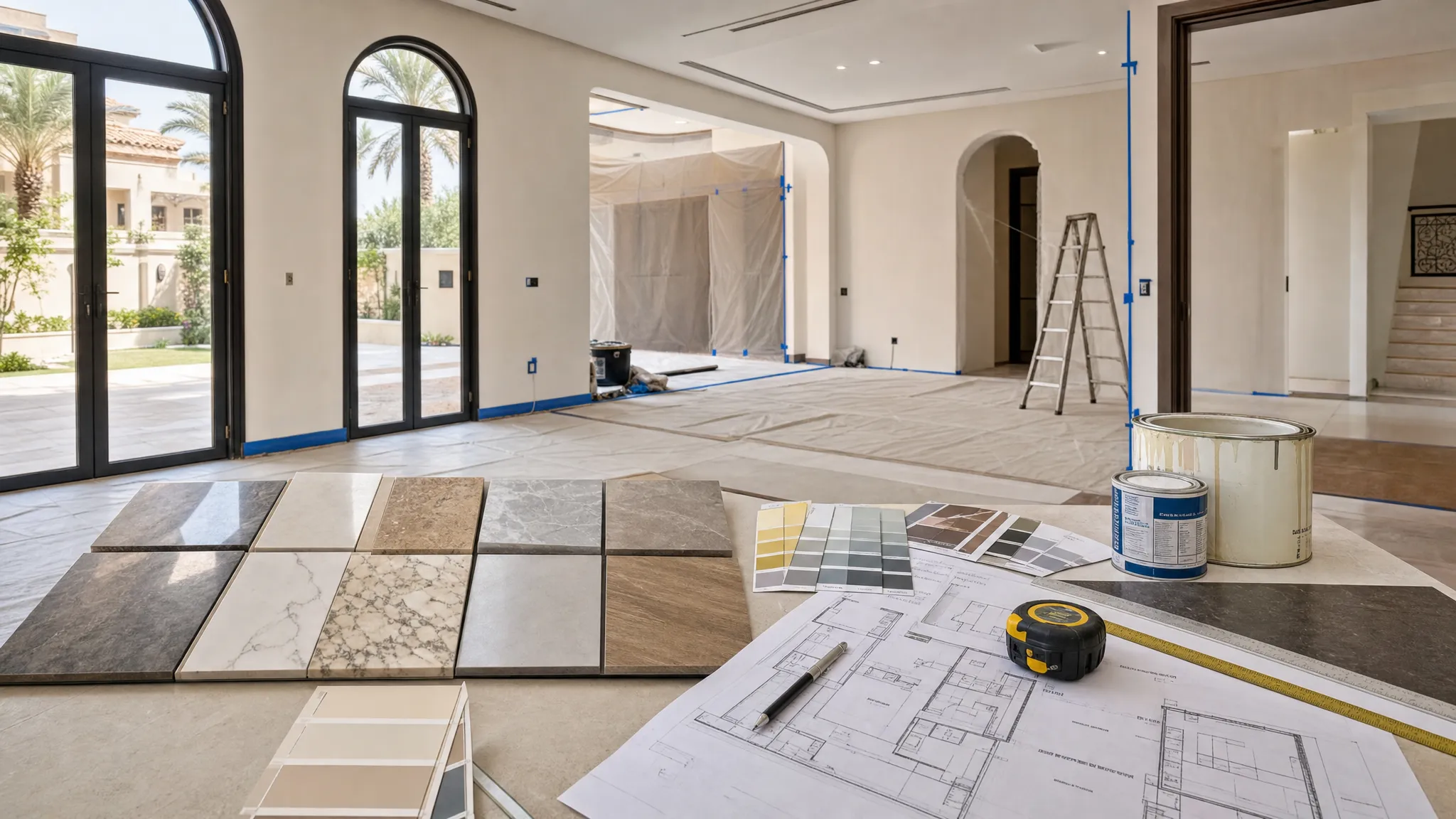
Many renovation problems start with an unclear quote. One contractor may include demolition, debris removal, waterproofing, electrical modifications, plumbing, painting, protection, supervision, and cleanup. Another may include only labor and basic materials. If you compare only the final number, the cheaper option may become the most expensive once exclusions appear.
Ask each contractor to provide an itemized quotation. It should describe the work area by area, list included materials or allowances, identify exclusions, and clarify payment milestones. The more detailed the quote, the easier it is to compare fairly.
| Quote detail | Strong sign | Warning sign |
|---|---|---|
| Scope of work | Breaks down tasks by area and trade | Uses broad phrases like complete renovation without detail |
| Materials | Names brands, specifications, or allowances | Says standard materials without explanation |
| Timeline | Gives phases and estimated duration | Promises an unrealistically fast completion |
| Exclusions | Clearly states what is not included | Avoids discussing possible extra charges |
| Variations | Explains how changes are priced and approved | Adds costs verbally with no written process |
| Payment terms | Connects payments to progress milestones | Requests a large upfront payment without justification |
The lowest quote is not automatically bad, and the highest quote is not automatically better. What matters is whether the scope, materials, supervision, and accountability match your expectations.
Evaluate communication before signing
You can learn a lot from how a contractor communicates before the project starts. Reliable contractors respond clearly, document decisions, and explain trade-offs in plain language. They do not pressure you to sign immediately, dismiss your concerns, or make every question feel inconvenient.
Pay attention to these early signals. If a contractor is slow, vague, or disorganized while trying to win the job, communication may become worse once work begins. On the other hand, a contractor who sends a clear scope, follows up on questions, explains site limitations, and documents assumptions is more likely to manage the project professionally.
Good communication is especially important during remodeling because site conditions can change. Hidden pipe routes, uneven walls, old wiring, moisture damage, or structural limitations may only become visible after demolition. A reliable contractor does not pretend surprises never happen. They explains how surprises will be assessed, priced, approved, and scheduled.
Check references and visit completed work when possible
References are valuable when you ask the right questions. Instead of asking only whether the contractor was good, ask previous clients about punctuality, cleanliness, supervision, cost control, defect handling, and communication under pressure.
Useful reference questions include:
- Was the final cost close to the approved scope?
- Did the contractor communicate delays or changes early?
- Was the site kept reasonably clean and safe?
- Were workers supervised consistently?
- Were defects or snags handled professionally after handover?
- Would you hire the same contractor again for another remodeling project?
If possible, ask to see a completed project or a current site. A finished project shows quality. A live site shows process. Look for protection of floors and fixtures, organized tools, safe working practices, and whether the work appears coordinated rather than chaotic.
Look for planning around MEP, waterproofing, and finishing details
In luxury homes and high-quality commercial spaces, the visible finish depends heavily on work hidden behind walls, floors, and ceilings. Electrical, plumbing, drainage, waterproofing, AC coordination, and substrate preparation all affect the final result.
For example, a bathroom may look beautiful on handover day, but poor waterproofing can cause leaks later. A kitchen may have premium cabinets, but weak electrical planning can leave appliances overloaded or outlets placed awkwardly. A villa may get new flooring, but poor leveling can create gaps, uneven transitions, or door clearance issues.
This is why reliable contractors for remodeling projects focus on sequencing. They know that demolition, civil work, MEP rough-in, waterproofing, testing, tiling, joinery, painting, lighting, and final snagging must happen in the right order. If a contractor talks only about finishes and ignores the technical base, ask more questions.
For bathroom-specific projects, the selection criteria become even more technical because drainage, waterproofing, ventilation, and fixture installation all need careful coordination. You can explore those details in this guide to choosing bathroom remodeling contractors in Dubai.
Watch for common red flags
Some warning signs appear before the project begins. Trust your instincts, but support them with practical checks. A reliable contractor should make you feel informed, not rushed or confused.
Be cautious if you notice:
- A quotation that is much lower than others without a clear reason
- Refusal to provide a written scope, license details, or references
- Pressure to pay a large deposit immediately
- No site visit before pricing a complex remodel
- Vague material descriptions or no brand specifications
- Verbal promises that are not added to the contract
- No clear project manager or point of contact
- Dismissive answers about approvals, waterproofing, MEP work, or warranty
- Poor punctuality during the quotation stage
One red flag does not always mean you must reject a contractor, but it should lead to further questions. Several red flags together are a strong reason to walk away.
Put everything important in the contract
A remodeling contract should protect both sides. It does not need to be overly complicated, but it should clearly state what will be done, what materials will be used, how long the project is expected to take, and how payments will be handled.
Key contract items include the final approved scope, drawings or design references, material specifications, payment schedule, start date, estimated completion date, variation process, defect liability or warranty terms, site access rules, working hours, cleanup responsibilities, and handover procedure.
For UAE properties, also clarify who is responsible for obtaining building management approvals, community NOCs, authority submissions, access permits, and work permits where required. If you live in a managed community or apartment building, confirm noise restrictions, lift protection requirements, contractor access rules, and debris disposal procedures before work begins.
Never rely only on verbal agreements. If you discuss a change on site, ask for it to be confirmed in writing before work continues. This simple habit prevents many disputes.
Choose based on value, accountability, and fit
The best contractor is not always the one with the biggest portfolio or the lowest price. The best fit is the contractor who understands your goals, has relevant experience, explains the process clearly, prices transparently, and takes responsibility for coordination.
For a small cosmetic update, a specialist trade contractor may be enough. For a full villa renovation, apartment remodel, office upgrade, or project involving civil, electrical, plumbing, carpentry, painting, and interior finishes, you need stronger project management and one accountable team.
Before making the final decision, compare each contractor against three questions. Do they understand the technical scope? Do they communicate in a way that gives you confidence? Do they have a documented plan for cost, timeline, quality, and handover? If the answer is yes, you are much closer to hiring the right team.
Frequently Asked Questions
How do I know if a remodeling contractor is reliable? A reliable contractor provides clear documentation, attends a proper site visit, shares relevant project experience, explains approvals and technical risks, gives an itemized quotation, and communicates professionally before you sign.
Should I choose the cheapest contractor for remodeling? Not necessarily. A low quote may exclude important items such as waterproofing, MEP work, supervision, debris removal, or material upgrades. Compare quotations by scope, specifications, payment terms, and accountability, not only by the final price.
Do remodeling projects in Dubai need approvals? Some projects do, especially those involving structural changes, MEP modifications, exterior work, apartment building rules, or community regulations. Requirements depend on the property, location, and scope, so confirm this before work begins.
What should be included in a remodeling contract? The contract should include the scope of work, material specifications, drawings or design references, timeline, payment schedule, variation process, approval responsibilities, warranty terms, and handover or snagging procedure.
Is a general contractor better than hiring separate trades? For complex remodeling projects, a general contractor is often better because one team coordinates civil work, electrical, plumbing, carpentry, painting, and finishing. Separate trades can work for smaller jobs, but they require more supervision from the homeowner.
Plan your remodeling project with confidence
Finding the right contractor takes time, but it is worth the effort. A reliable team will help you avoid hidden costs, protect your property, coordinate trades, and deliver a finish that matches your vision.
If you are planning a villa, home, apartment, office, or commercial renovation in the UAE, Renovate UAE provides customized remodeling solutions, interior design support, civil works, MEP services, carpentry, painting, landscaping, and luxury upgrades. You can request a free site visit and estimate to discuss your project with a team that understands renovation work across the UAE.