


A home remodel can look simple at first: change the flooring, update the kitchen, refresh the bathrooms, repaint the walls. Then the reality appears. The work affects plumbing, electrical points, ceiling levels, waterproofing, joinery, approvals, delivery schedules, and several trades that all depend on one another.
That is usually the moment homeowners realize they may not need “just a worker” or a single specialist. They need a general contractor for home remodel planning, coordination, site supervision, and accountability.
In Dubai and across the UAE, this decision matters even more. Villas, apartments, and commercial units often involve community rules, building management approvals, strict working hours, service elevator bookings, material access restrictions, and high expectations for finishing quality. A general contractor helps bring those moving parts together so the renovation does not become a stressful chain of delays, rework, and unclear responsibility.
What a General Contractor Does in a Home Remodel
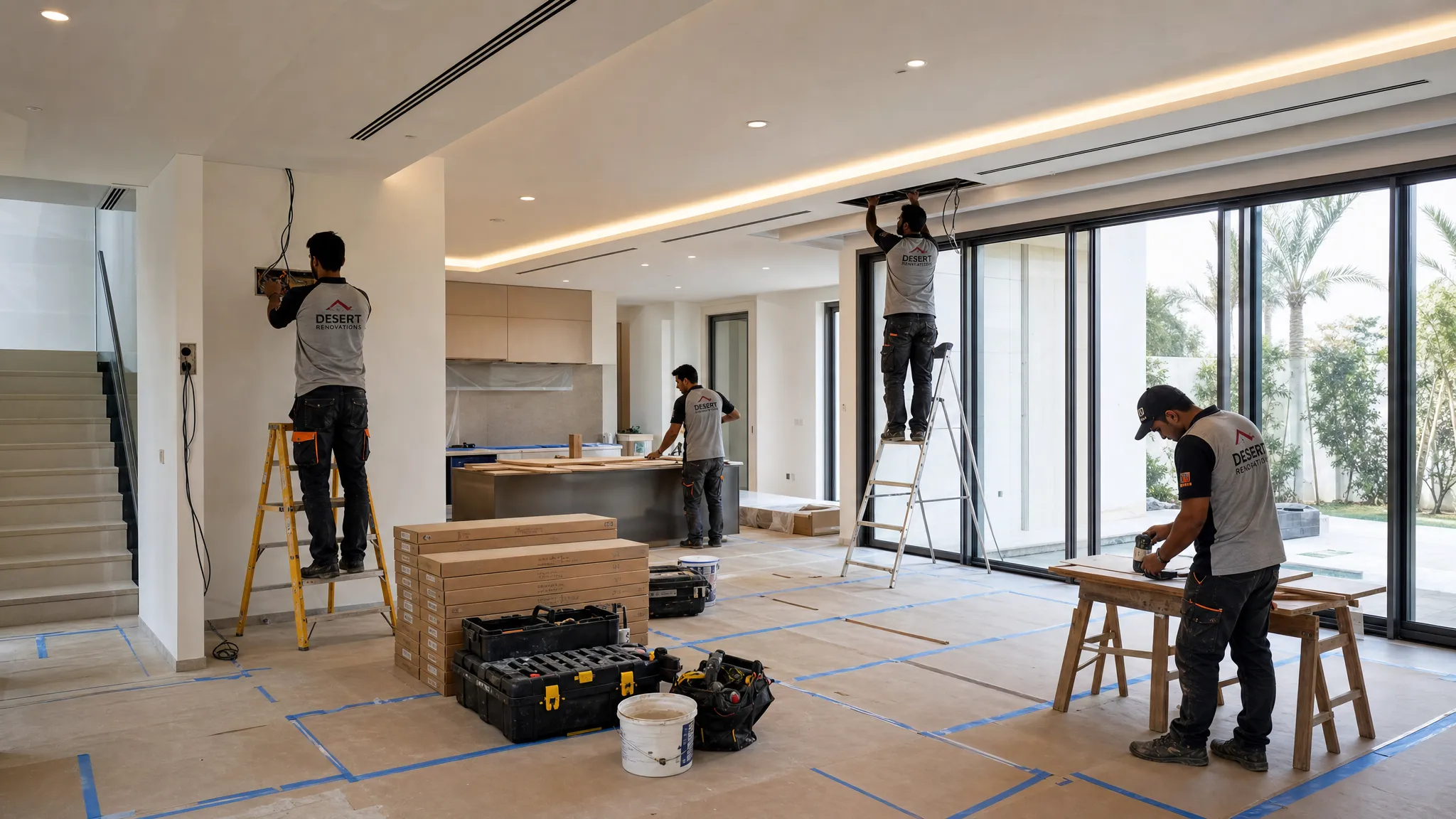
A general contractor is the main professional responsible for organizing and delivering the renovation. Instead of the homeowner separately managing plumbers, electricians, painters, carpenters, tilers, AC technicians, and civil workers, the contractor coordinates the project as one complete scope.
For a home remodel, this can include site inspection, technical planning, labor coordination, material scheduling, subcontractor management, quality checks, safety measures, and final handover. In practical terms, the general contractor becomes the single point of contact for the renovation.
This does not mean every small home update requires one. If you are replacing a single light fixture or repainting one room, a specialist may be enough. But once the work affects multiple areas, trades, finishes, or technical systems, a general contractor becomes valuable because someone must control the sequence.
For example, a bathroom remodel may require demolition, waterproofing, plumbing relocation, electrical adjustments, tiling, false ceiling work, lighting installation, vanity carpentry, glass partitioning, and painting. If one step is missed or done in the wrong order, the finished bathroom may look good for a few weeks but develop leaks, cracks, drainage problems, or access issues later.
You Need a General Contractor When Several Trades Are Involved
The clearest sign you need a general contractor is when your remodel requires more than one or two trades. A kitchen remodel, for instance, rarely involves only cabinets. It may need plumbing for sinks and dishwashers, electrical points for appliances, gas or cooking provisions, countertop fabrication, backsplash installation, ceiling changes, lighting, flooring, and painting.
When several trades work in the same space, coordination becomes the difference between smooth progress and expensive mistakes. The electrician needs to finish before the wall is closed. The plumber needs exact cabinet and appliance positions. The carpenter needs measurements after tile and flooring levels are confirmed. The countertop supplier needs the base units installed accurately before templating.
A general contractor manages these dependencies. Without that coordination, homeowners often face situations where one worker blames another, materials arrive too early or too late, and completed work must be opened again to fix something hidden behind it.
This is especially important in luxury home renovations, where details such as shadow gaps, concealed lighting, stone alignment, cabinet reveals, and hardware placement affect the final look. High-end finishes leave less room for guesswork.
You Need One When Walls, Layouts, or Structural Elements Change
If your remodel changes the layout of your villa, apartment, or townhouse, you should involve a professional contractor from the beginning. Removing walls, opening up kitchens, converting rooms, extending living areas, or changing bathroom locations can affect structure, services, ventilation, fire safety, and approvals.
Even non-load-bearing partitions may contain wiring, plumbing, AC ducts, or drainage routes. In apartments, there may also be restrictions on wet area relocation, floor penetrations, noise, and working hours. In villas, layout changes may affect external walls, slab levels, waterproofing, façade finishes, landscaping, or utility access.
A general contractor can inspect what is possible before demolition begins. They can also help identify whether drawings, NOCs, community approvals, or engineering input may be required. That early review protects you from starting work that later has to be stopped, reversed, or redesigned.
This is one of the biggest differences between a basic handyman approach and professional remodeling. A handyman may focus on the immediate task. A general contractor considers how each task affects the entire property.
You Need a General Contractor When MEP Work Is Part of the Remodel
MEP stands for mechanical, electrical, and plumbing. In home renovation, MEP work is often hidden, but it is one of the most important parts of the project. It affects safety, comfort, water pressure, drainage, lighting, appliance performance, AC efficiency, and long-term reliability.
You should strongly consider a general contractor if your remodel includes:
- Moving kitchen or bathroom plumbing points
- Adding new electrical sockets, lighting circuits, or appliance connections
- Modifying AC vents, ducts, thermostats, or ceiling layouts
- Installing water heaters, pumps, or filtration systems
- Upgrading bathroom drainage or waterproofing
- Creating smart home, CCTV, or networking provisions
MEP mistakes can be expensive because they are usually hidden under tiles, inside ceilings, behind cabinets, or within walls. A poorly planned electrical layout may leave you with visible extension cords after the remodel. Weak waterproofing may cause leaks into adjacent rooms or lower floors. Incorrect AC planning may make a newly renovated room uncomfortable despite beautiful finishes.
A capable general contractor ensures MEP work is planned before finishing begins, not improvised after the design is already installed.
You Need One When the Remodel Requires Approvals or Building Rules
In the UAE, many renovation projects require some level of approval, especially in apartments, gated communities, and commercial buildings. Requirements vary depending on the property type, location, building management, developer, and scope of work.
You may need approvals or permissions for activities such as demolition, noisy works, wet area changes, façade work, external painting, structural modifications, service changes, or work in common areas. Apartments often have stricter rules because the building systems are shared. Villas in communities may also have exterior guidelines, access requirements, and restrictions on construction hours.
A general contractor who regularly works on home remodels can guide you through the practical process: what documents may be needed, when approvals should be requested, how to schedule work around permitted hours, and how to avoid delays caused by missing paperwork.
This matters because approval delays can disrupt the entire schedule. If demolition is stopped for missing permission, your material deliveries, labor bookings, and temporary living arrangements may all be affected.
You Need a General Contractor When You Want One Accountable Team
Many homeowners try to save money by hiring each trade separately. Sometimes this works for very small projects. But for a full home remodel, the hidden cost is management time and risk.
When you hire separate workers directly, you become the project manager. You must decide who comes first, who fixes defects, who orders materials, who verifies measurements, who protects finished surfaces, and who is responsible when something goes wrong.
A general contractor reduces this confusion by taking responsibility for the overall delivery. Instead of coordinating five or ten different parties yourself, you deal with one team. That does not remove every decision from your side, but it makes communication cleaner and responsibility clearer.
Here is a simple way to compare both approaches:
| Remodel situation | Hiring separate trades may work | General contractor is better |
|---|---|---|
| Painting one bedroom | Yes | Usually not necessary |
| Replacing a few fixtures | Yes | Usually not necessary |
| Kitchen remodel with plumbing and electrical | Risky | Yes |
| Full bathroom renovation | Risky | Yes |
| Villa remodeling with layout changes | No | Yes |
| Apartment renovation needing approvals | No | Yes |
| Luxury upgrade with custom finishes | No | Yes |
| Remodel while you live in the home | Difficult | Yes |
The more complex the project, the more valuable coordination becomes.
You Need One When Timing Matters
If you have a deadline, such as moving into a villa, preparing a rental property, opening a commercial space, or completing a remodel before family arrives, a general contractor is usually the safer choice.
Renovation delays often happen because tasks are not sequenced properly. Flooring cannot start because wet works are unfinished. Cabinets cannot be installed because wall tiles are delayed. Painting is completed too early and gets damaged during later work. Imported materials arrive after the team is already waiting on site.
A general contractor creates a practical schedule based on the real order of work. They also plan around lead times for items such as tiles, sanitaryware, lighting, doors, hardware, countertops, custom wardrobes, and kitchen joinery.
In UAE renovations, timing also depends on access permissions, building working hours, delivery restrictions, and inspection stages. A contractor familiar with these conditions can build a more realistic plan than a homeowner relying on optimistic estimates from separate suppliers.
If you want a deeper look at how professionals reduce renovation stress, Renovate UAE has also covered how remodeling home contractors plan stress-free projects.
You Need One When the Remodel Includes Custom Design and Finishes
Custom renovation requires more coordination than standard replacement work. If your project includes bespoke wardrobes, feature walls, luxury bathrooms, marble or porcelain slabs, decorative ceilings, mood lighting, built-in storage, outdoor landscaping, or a new interior design concept, you need accurate planning from the start.
Custom finishes depend on precise measurements and sequencing. A wall panel may need electrical points positioned before fabrication. A floating vanity may require concealed supports. A kitchen island may need floor sockets, plumbing, ventilation, and countertop reinforcement. A home office may need lighting, acoustic comfort, cable management, and built-in joinery aligned together.
This is where a general contractor works alongside designers, suppliers, and specialists to make sure the design can actually be built. The goal is not only to make the home look impressive on handover day. It is to make sure the renovated space functions well every day afterward.
For homeowners planning media rooms, private offices, entertainment spaces, or noise-sensitive areas, acoustic performance should also be discussed early. Reviewing specialist resources on acoustic and soundproofing solutions can help you understand how sound control may influence walls, ceilings, doors, and material choices before the remodel begins.
You Need One When You Are Renovating While Living in the Home
Living through a remodel is possible, but it requires careful planning. Dust control, temporary access, safe walkways, water shutdowns, power interruptions, working hours, and daily cleaning all need attention. If the home has children, elderly family members, pets, or remote workers, the planning becomes even more important.
A general contractor can phase the work to reduce disruption. For example, one bathroom may remain usable while another is renovated. Kitchen works may be scheduled after temporary cooking arrangements are planned. Noisy demolition can be limited to specific periods where permitted. Materials can be stored safely without blocking daily movement.
Without site management, renovation work can quickly spread across the entire home. Tools, dust, packaging, and unfinished tasks may affect spaces that were not supposed to be part of the project. A contractor helps contain the work zone and maintain a safer environment.
You Need One When Budget Control Is Important
Some homeowners avoid general contractors because they assume managing separate trades will be cheaper. Sometimes the initial quotations look lower. But a home remodel budget is not only about the first price. It is also about preventing rework, wrong purchases, delays, damage, and missing scope.
A professional general contractor should help clarify what is included in the quote, what is excluded, what materials are assumed, and where allowances may apply. This gives you a more realistic view of the total cost before the work begins.
For example, a bathroom quote may seem attractive until you realize it excludes waterproofing, drainage changes, tile adhesive, ceiling work, sanitary installation, debris removal, or final painting. A kitchen quote may exclude electrical modifications, plumbing, countertop installation, backsplash work, or appliance fitting.
The best way to control budget is not to choose the lowest number. It is to choose the clearest scope. A detailed contractor quote allows you to compare properly and avoid surprise costs later. If you are evaluating multiple renovation companies, this guide on how to compare home renovation services in Dubai can help you assess scope, experience, approvals, and communication.
You May Not Need a General Contractor for Small, Isolated Jobs
A general contractor is not always necessary. If the work is simple, low-risk, and limited to one trade, hiring a specialist directly may be enough.
Examples may include repainting one room, replacing curtains, installing a single shelf, changing loose cabinet hinges, replacing a basic tap without plumbing changes, or swapping a decorative light fixture where the electrical point already exists.
The key question is whether the task affects other systems or other trades. If it does not, the project may be simple enough to manage directly. If it does, a contractor can protect you from mistakes that are not obvious at the beginning.
A useful rule: if one mistake could damage finished surfaces, cause a leak, create an electrical issue, delay another trade, or require approval, involve a general contractor.
Questions to Ask Before Hiring a General Contractor
Choosing the right contractor is as important as deciding to hire one. A professional team should be able to explain the process clearly, inspect the site, identify risks, and provide a scope that matches your expectations.
Before signing, ask questions such as:
- Have you handled similar villa, apartment, or home remodel projects in the UAE?
- What is included and excluded in your quotation?
- Who will supervise the site and communicate with me?
- How will you manage plumbing, electrical, civil, carpentry, and finishing work?
- What approvals or building permissions may be needed?
- How do you handle changes requested during the project?
- What materials, brands, or finish standards are assumed in the estimate?
- How will the home be protected during demolition and installation?
- What is the expected timeline and what could affect it?
Pay attention not only to the answers but also to how the contractor communicates. Clear communication before the project usually indicates better coordination during the project.
Red Flags That Suggest You Should Look Elsewhere
A home remodel is too important to leave to vague promises. Be cautious if a contractor refuses to visit the site before quoting, gives a very low price without detailed scope, avoids discussing approvals, cannot explain the work sequence, or pressures you to start immediately without documentation.
Other warning signs include unclear payment terms, no written quotation, no discussion of material quality, poor response times, and a lack of experience with your type of property. In luxury renovations, be especially careful with teams that focus only on appearance but do not explain waterproofing, MEP, substrate preparation, or installation details.
A good contractor should be transparent about challenges. If a wall cannot be removed, if a bathroom layout is risky, if a material has a long lead time, or if an approval may delay the schedule, you should hear that early. Honest planning is far better than optimistic promises followed by problems on site.
What a Good General Contractor Brings to a Home Remodel
The right contractor brings structure to the entire renovation. They help convert your ideas into a workable plan, then coordinate the people, materials, and sequence needed to deliver it.
For UAE homeowners, the value often appears in five areas: technical planning, approval awareness, trade coordination, finish quality, and accountability. A contractor who understands all five can help you avoid the most common renovation frustrations.
A good general contractor should also respect your lifestyle and property. That means protecting existing finishes, managing dust and debris, keeping the site organized, communicating progress, and checking quality before handover. These details may not look dramatic in a quotation, but they have a major effect on your renovation experience.
Frequently Asked Questions
Do I need a general contractor for a kitchen remodel? Yes, in most cases. A kitchen remodel usually involves plumbing, electrical work, cabinetry, countertops, appliances, lighting, and finishing. A general contractor helps coordinate these trades in the correct order.
Is a general contractor the same as an interior designer? No. An interior designer focuses on layout, style, finishes, and the overall design concept. A general contractor focuses on executing the work, coordinating trades, managing the site, and delivering the renovation. On many projects, both roles work together.
Can I manage a home remodel myself? You can manage small, simple jobs yourself. For larger remodels involving approvals, MEP work, layout changes, or multiple trades, self-management can become stressful and risky unless you have construction experience.
How early should I contact a general contractor? Contact a contractor before finalizing designs or ordering materials. Early site inspection can reveal technical limitations, approval needs, and sequencing issues that may affect the design or budget.
What should be included in a contractor’s estimate? A good estimate should include the scope of work, materials or allowances, labor, exclusions, timeline assumptions, payment terms, and any conditions related to approvals, access, or site limitations.
Plan Your Home Remodel With the Right Team
You need a general contractor when your remodel becomes more than a simple single-trade task. If the project includes layout changes, kitchen or bathroom upgrades, MEP work, custom finishes, approvals, or several trades working together, professional coordination can save time, reduce stress, and protect the quality of your investment.
Renovate UAE provides villa renovation, home remodeling, apartment renovation, kitchen and bathroom upgrades, interior design solutions, civil works, electrical and plumbing services, carpentry, painting, and landscaping across the UAE. Every project can begin with a free site visit and estimate, helping you understand the scope before making decisions.
If you are planning a home remodel in Dubai or anywhere in the UAE, contact Renovate UAE to discuss your space, priorities, timeline, and renovation goals.